
980 Block Party
Curriculum: From Public Engagement to Collective Power (elective seminar), Fall 2025
Professor: Janette Kim
Studio Partner: EVOAK! (Randolph Belle and Jeremy Liu)
Related Studio: Constructive Reparations
Students: Salim Ahmed, Khushboo Anuvadia, Mariam Behbehani, Jin Mook Kang, Dawn Lorence, Ritika Menon Menon, Julianna Barreto, Eitan Reuven, Arya Manish Tipre, Gaoyang Marshall Dong, Amanda Gomez, Yicheng Leo Li, and Zi ching Ooi
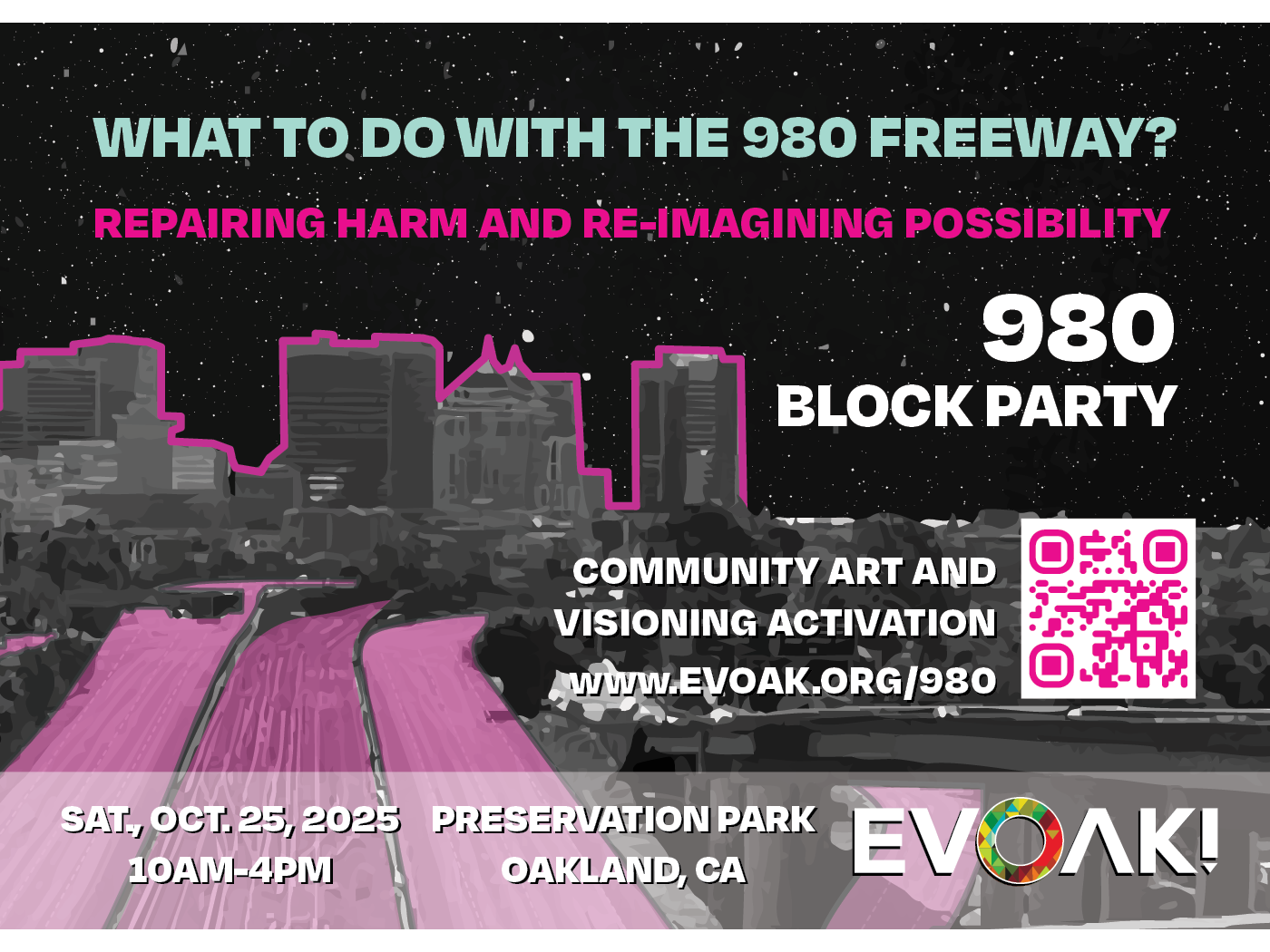
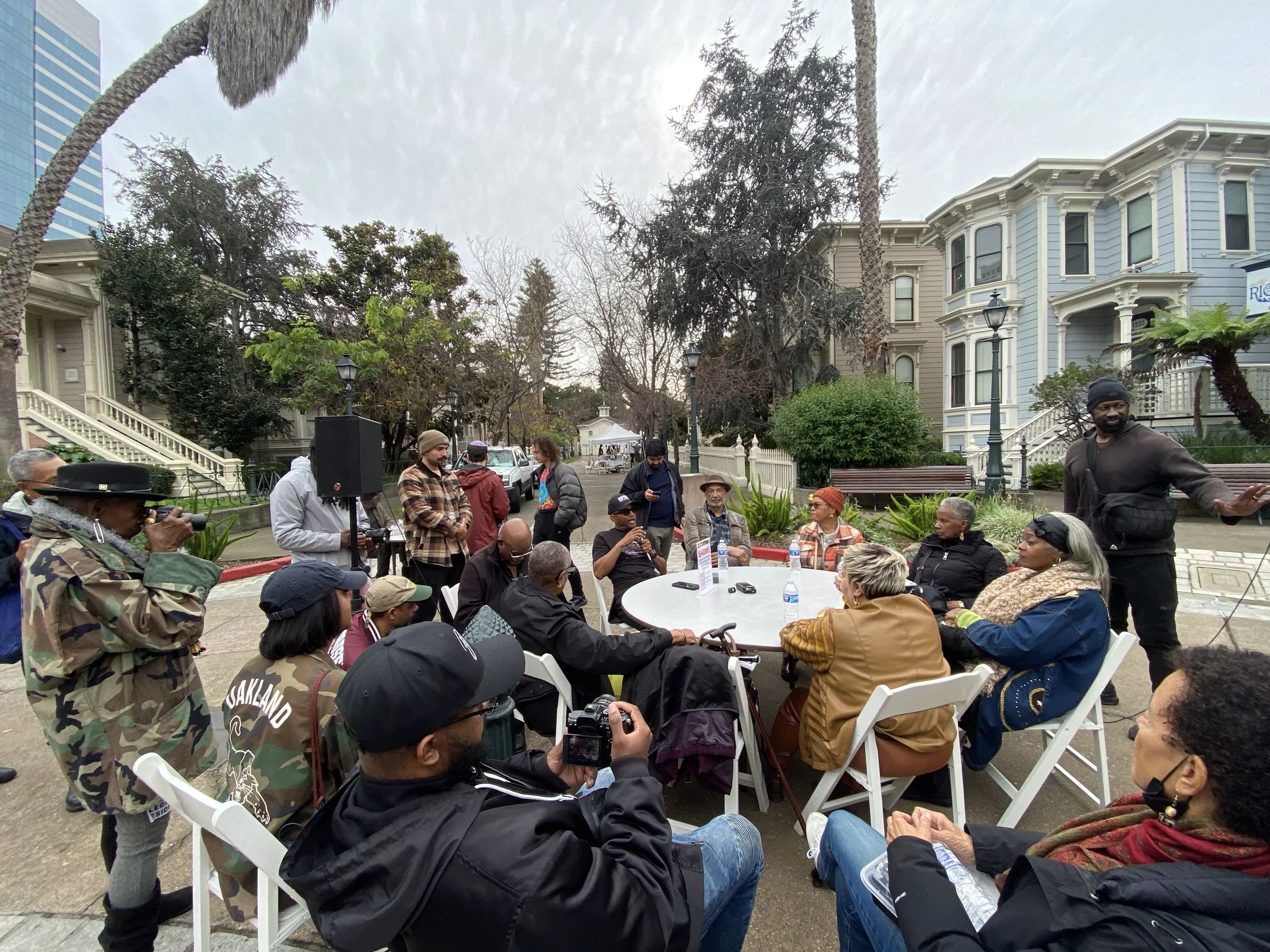
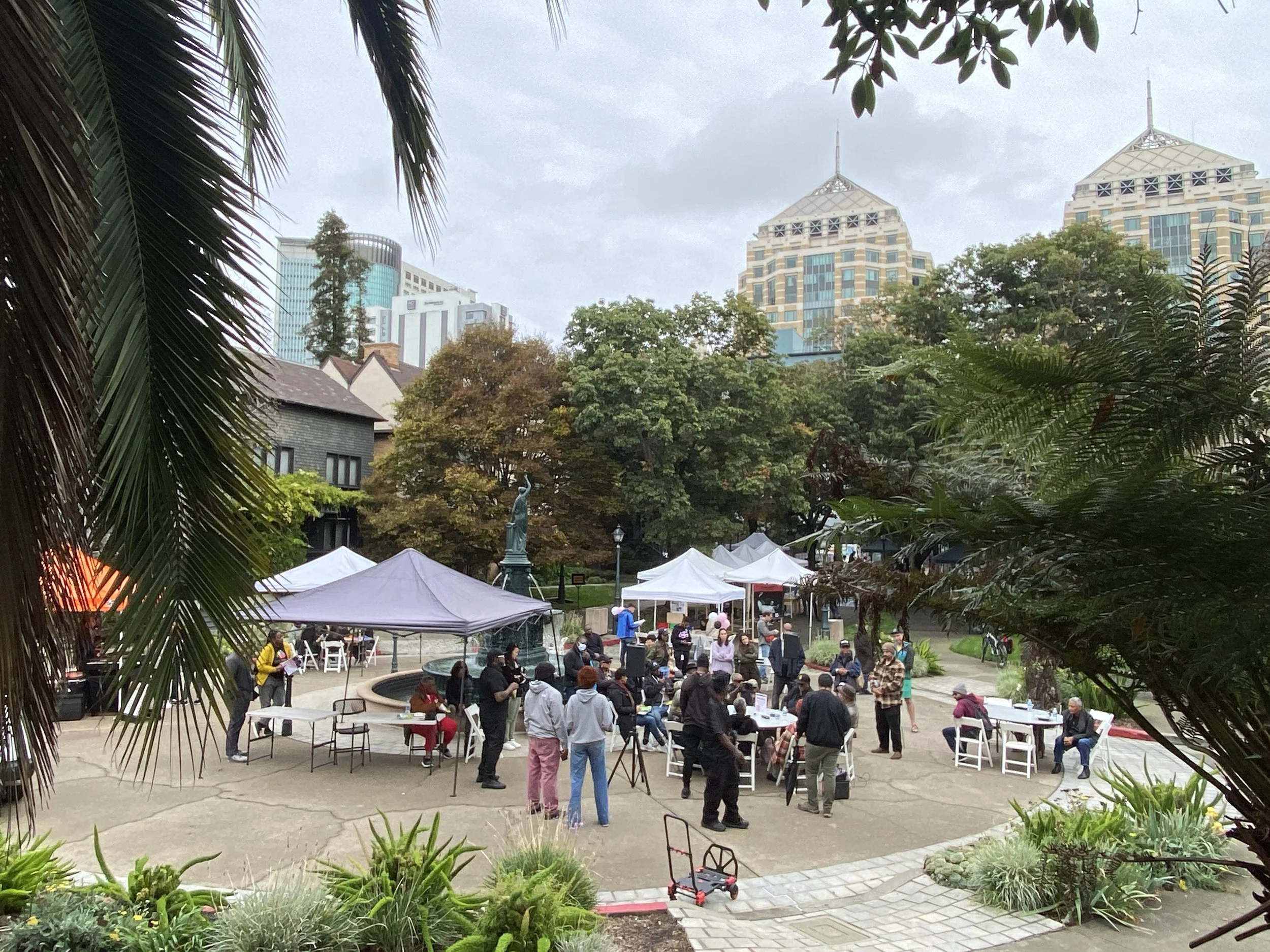
In this seminar, students worked with Oakland community members to create public engagement tools that invite community members to discuss, debate, and imagine the future of the I-980 corridor. We hosted a public block party at Oakland’s Preservation Park on October 25, 2025.
As EVOAK! describes it: “The 980 Block Party is a landmark community festival that mobilizes local residents through art, storytelling, and participatory design to reimagine the future of the I-980 corridor with an equitable development lens. The event builds on West Oakland’s cultural legacy with a commitment to policy change around comprehensive creative community development. … Each interactive exercise at the 980 Block Party gives you the chance to share your voice and shape the future. Led by artists, community leaders, and partners, these activities highlight the harm caused by the freeway while inviting us to imagine and co-create an inclusive, equitable future for West Oakland.”

Sitemapping the Future
Salim Ahmed, Khushboo Anuvadia, and Ritika Menon Menon
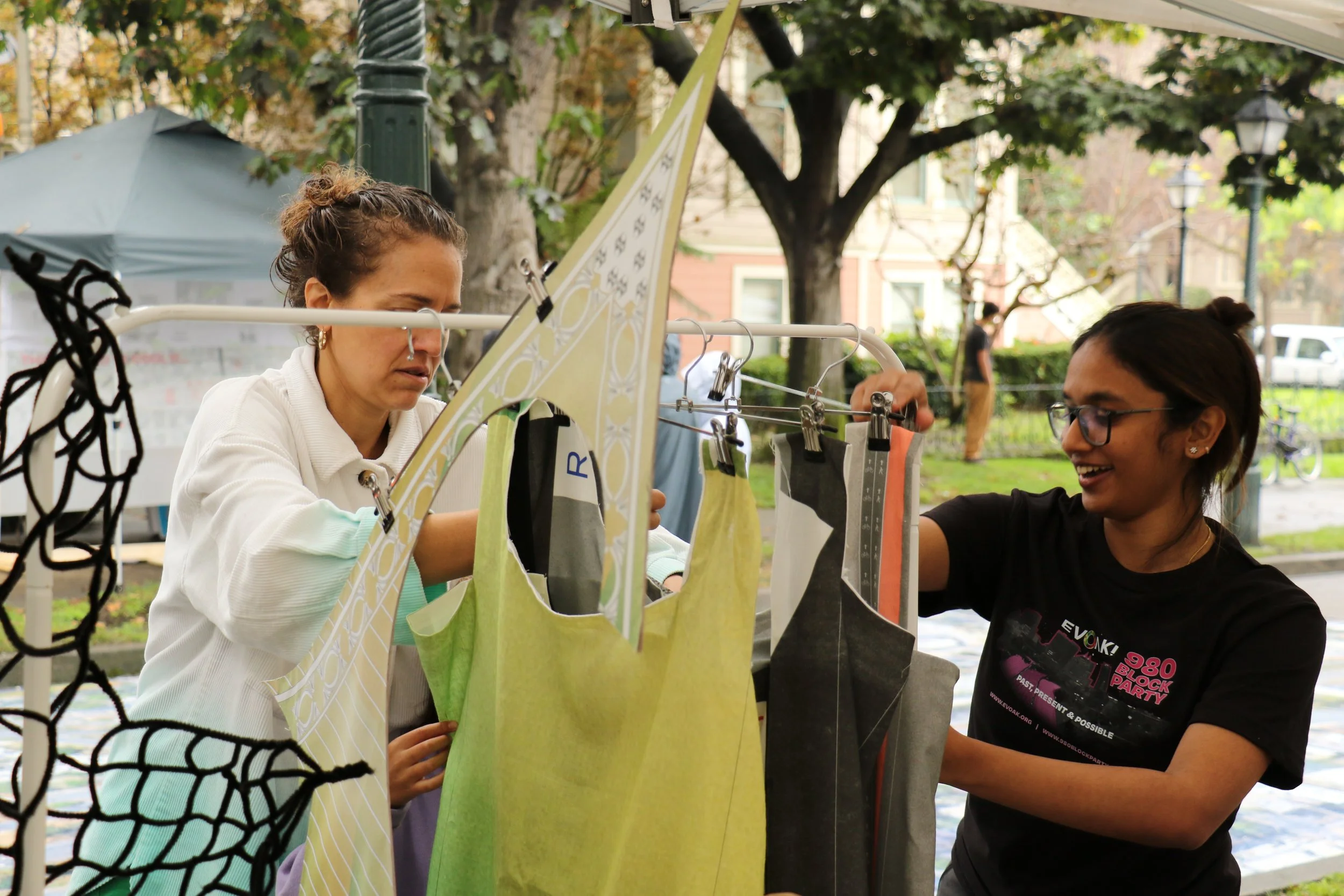
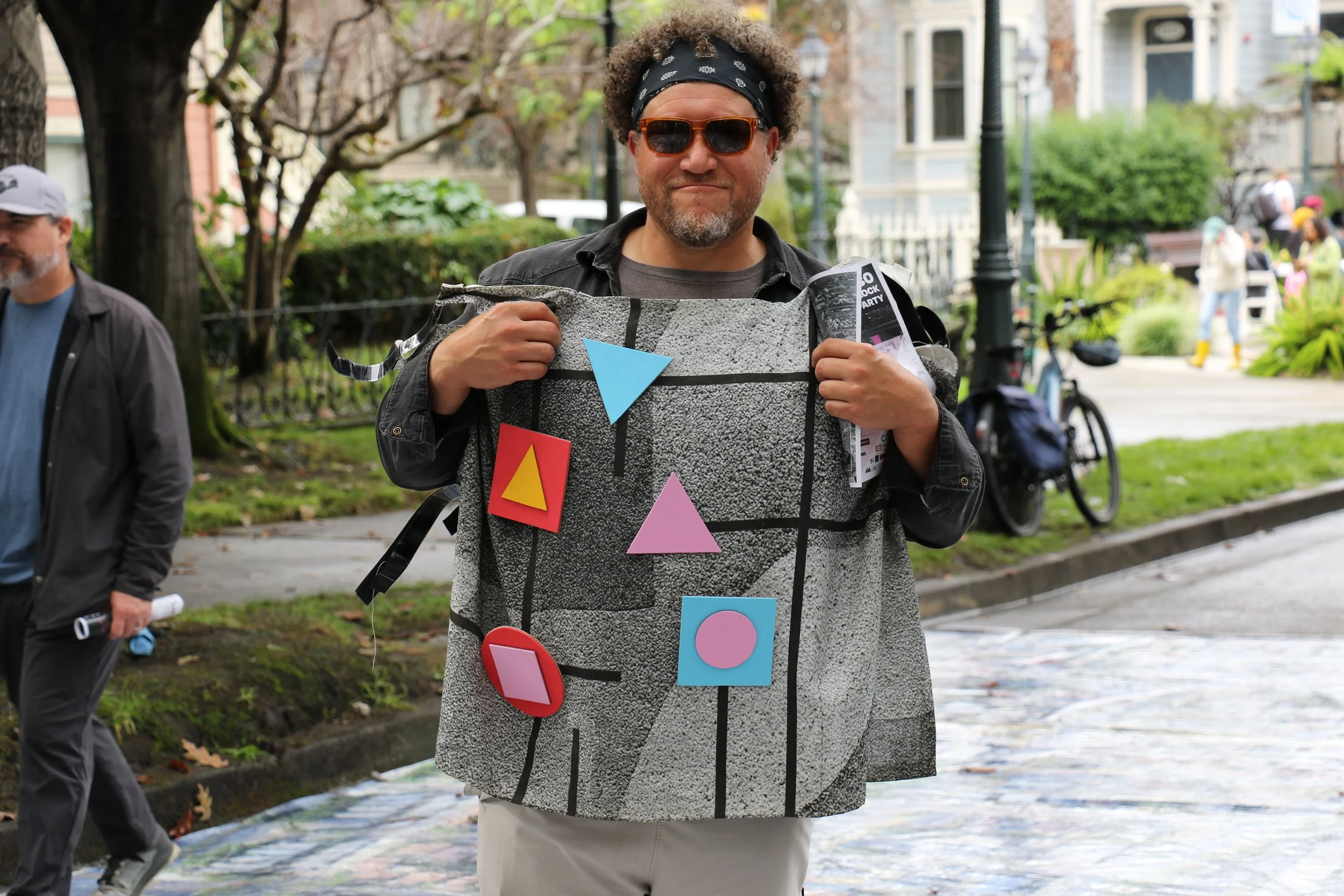
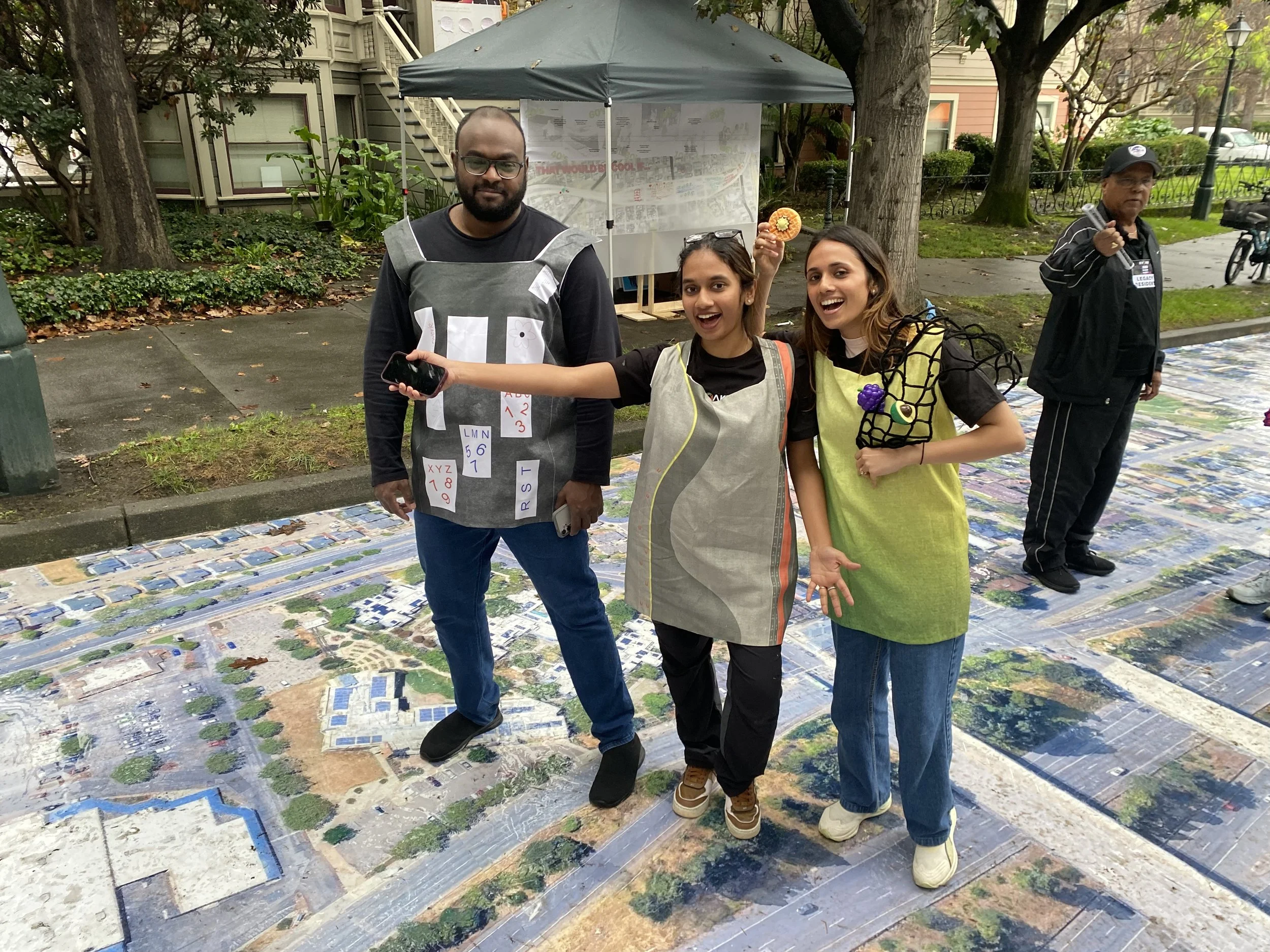
At the heart of the 980 Block Party, Site Mapping the Future transforms participants into community planners and dreamers. Centered around a massive, floor-sized map of the corridor, this interactive activation invites attendees to step directly into the design process. Each participant selects a “costume” or marker representing a vital urban element—such as a park, business, playground, or home—they believe belongs in the reimagined I-980 corridor. By standing on the map at their chosen location, participants bring their vision to life at a citywide scale. Every placement is photographed and added to the growing Collective Vision Wall, capturing a living mosaic of ideas for an equitable and connected West Oakland. This immersive experience turns imagination into action, letting the community literally stand for the future they want to build.

Legacy Photo Booths
Marshall Gaoyang Dong, Leo Yicheng Li, Ziching Ooi
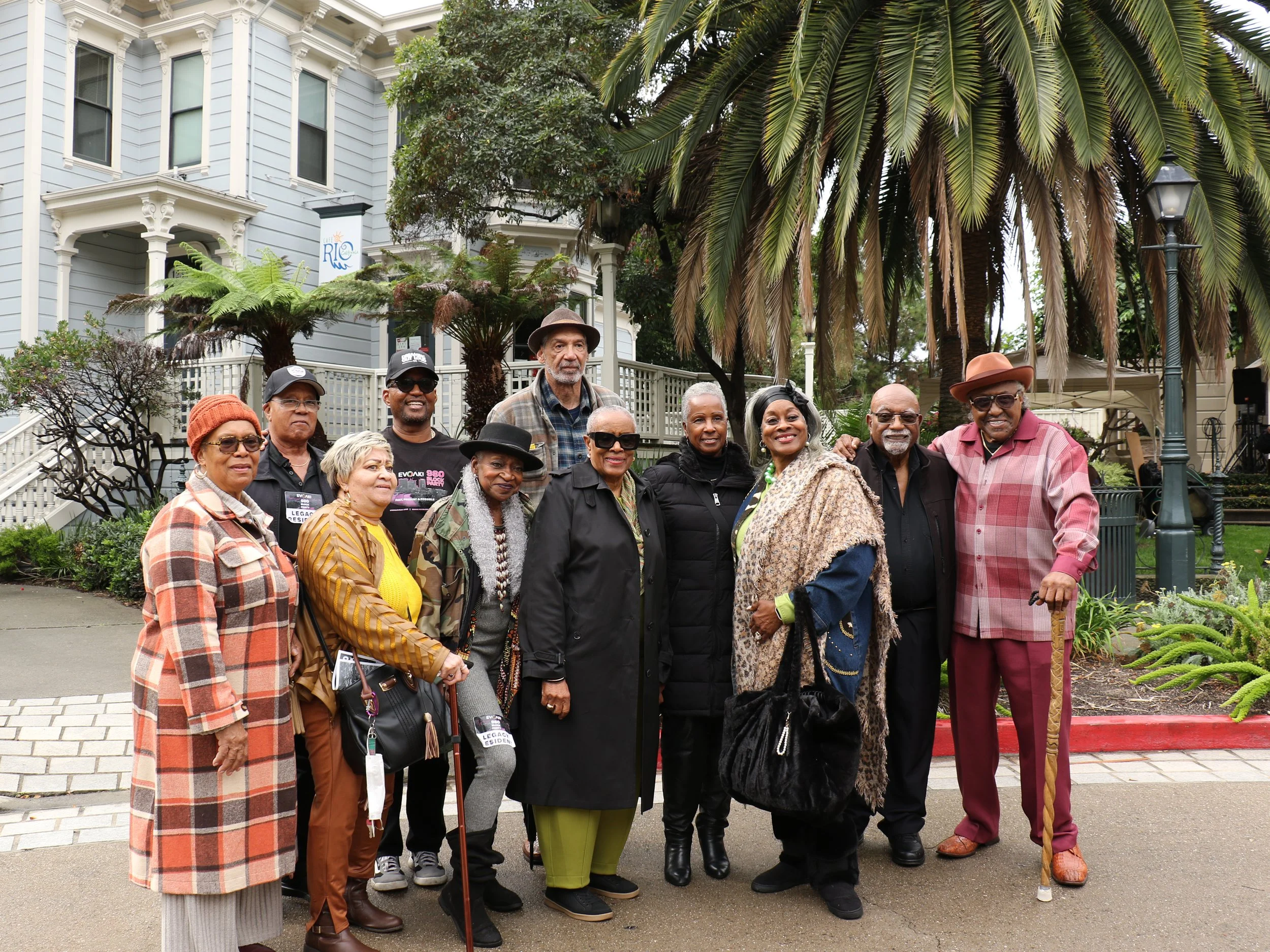
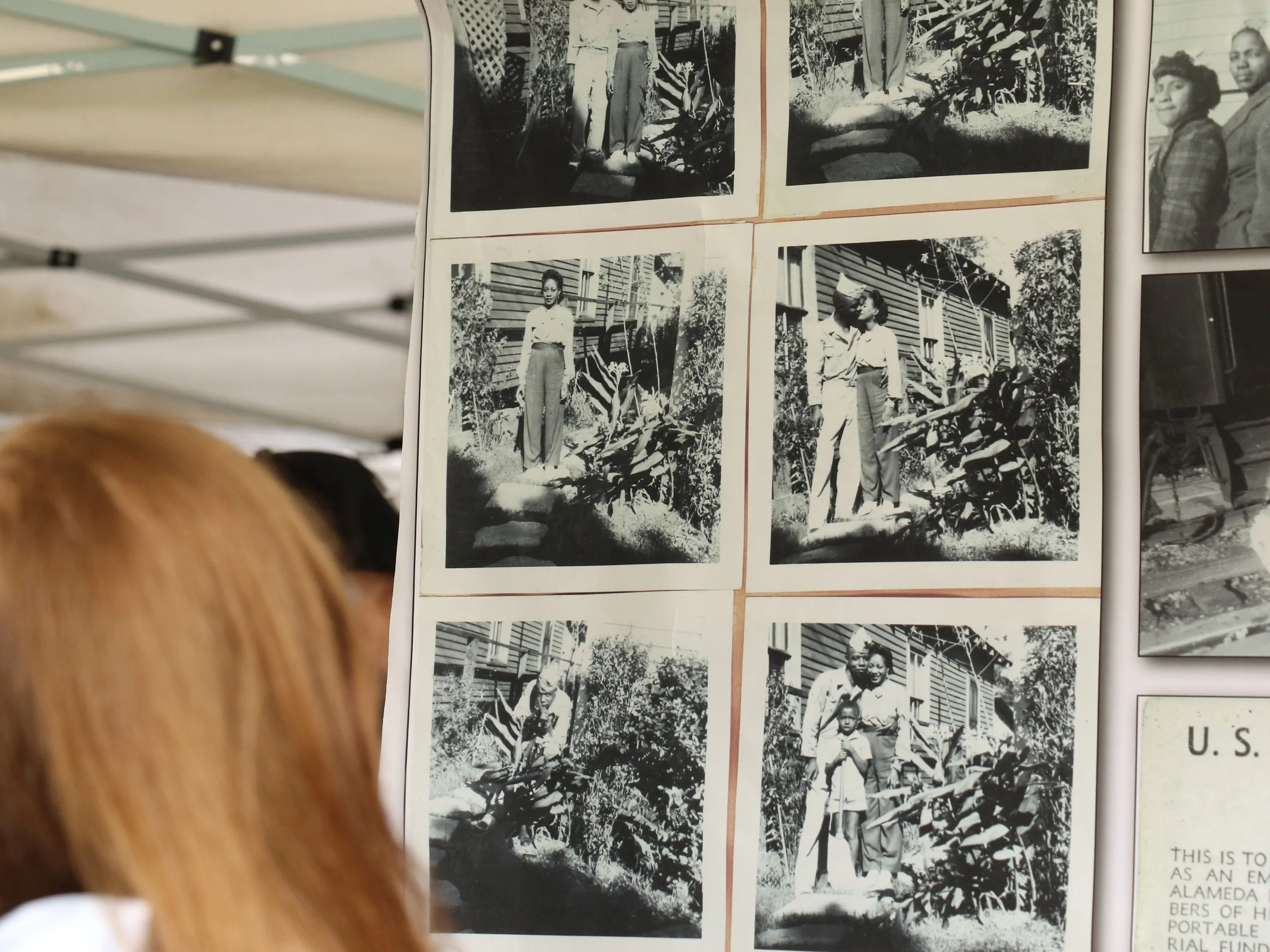
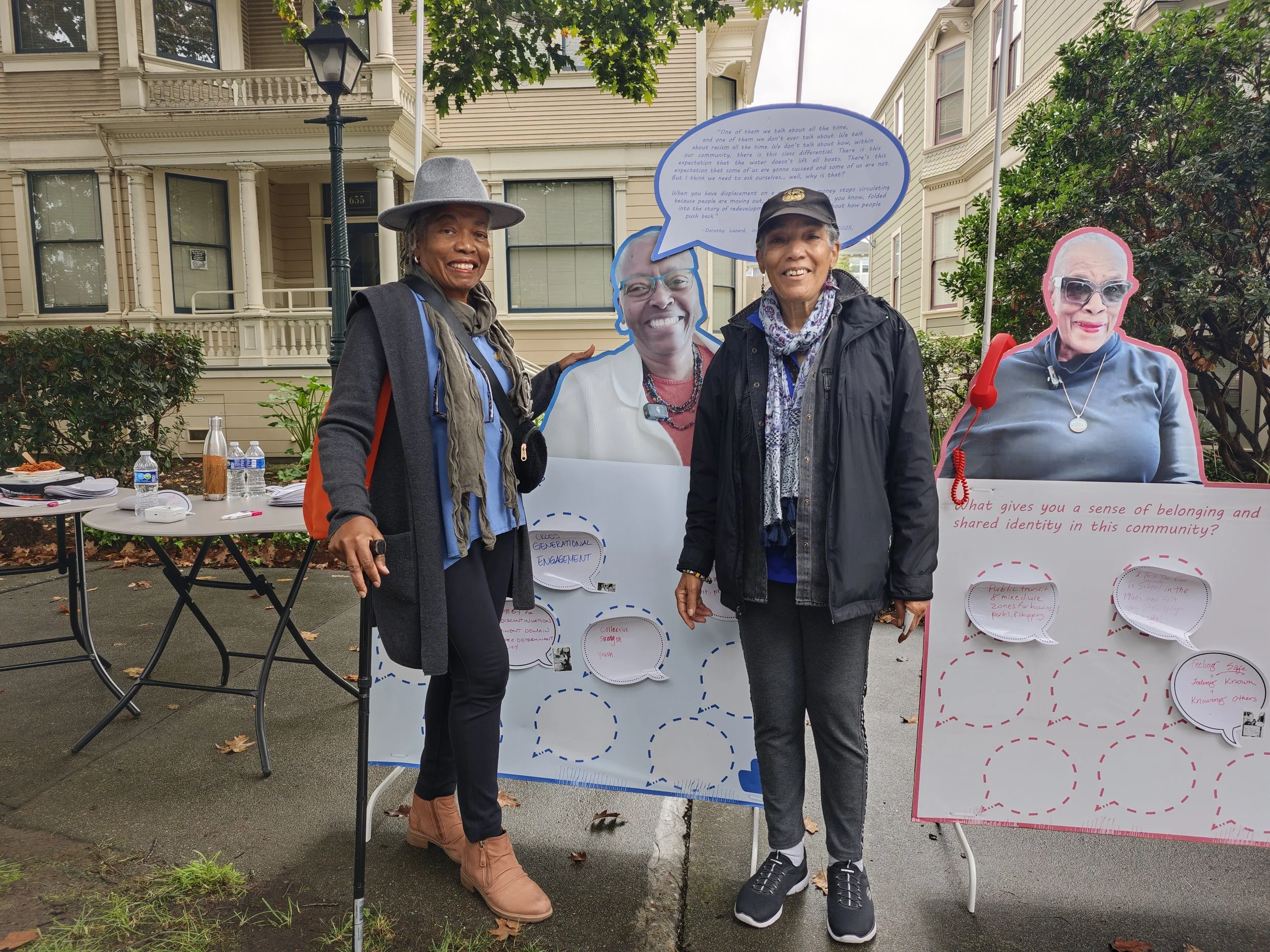
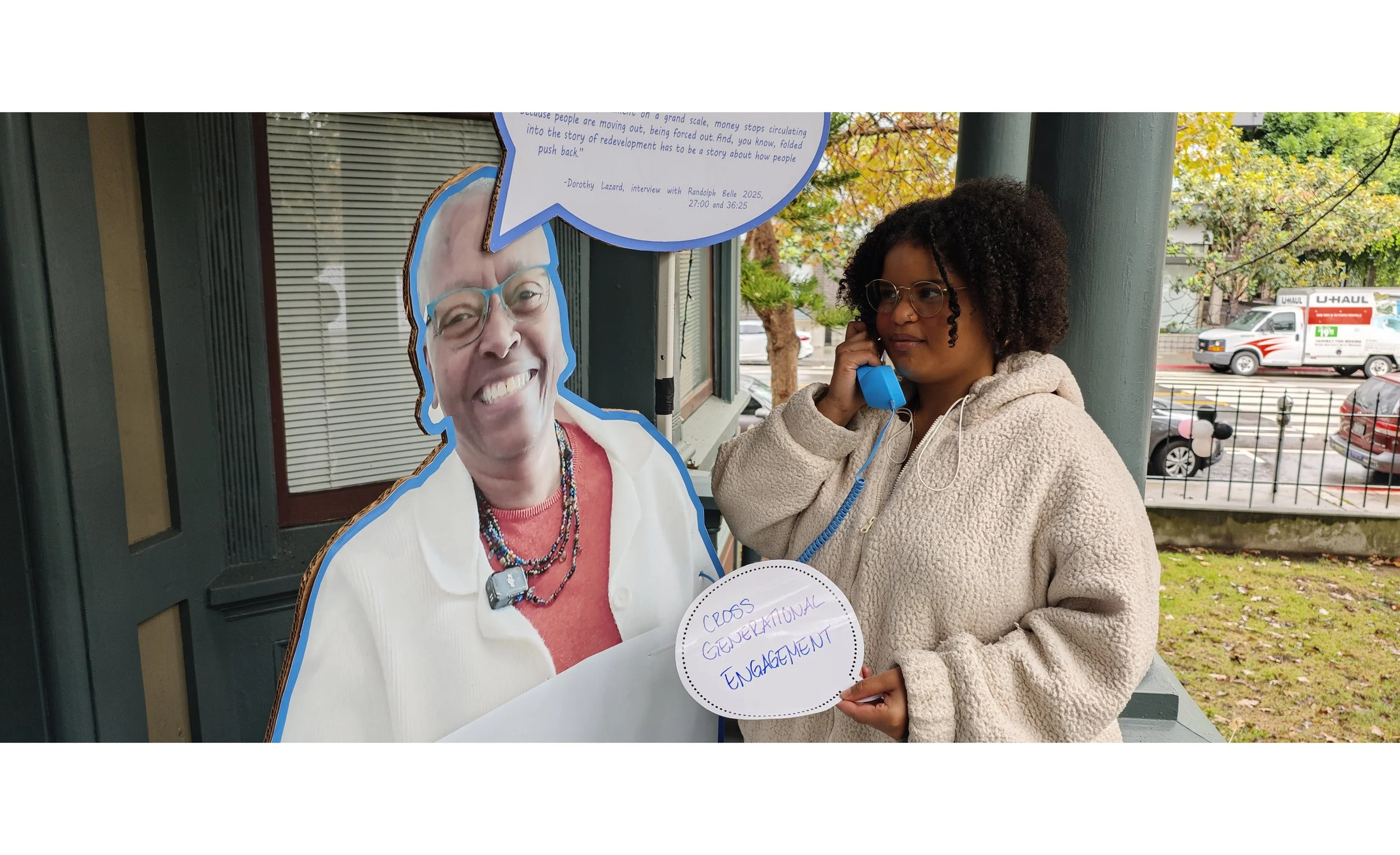
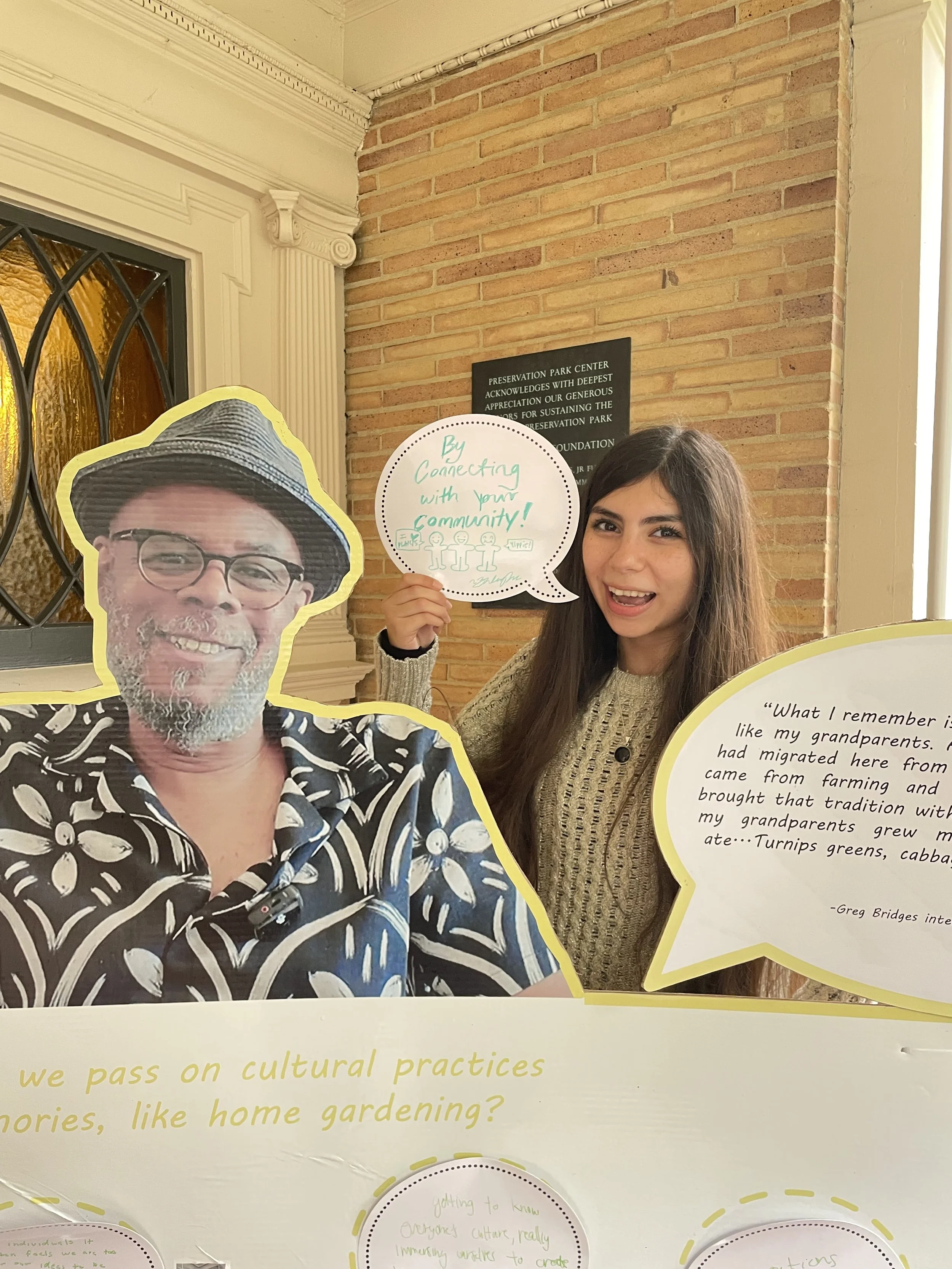
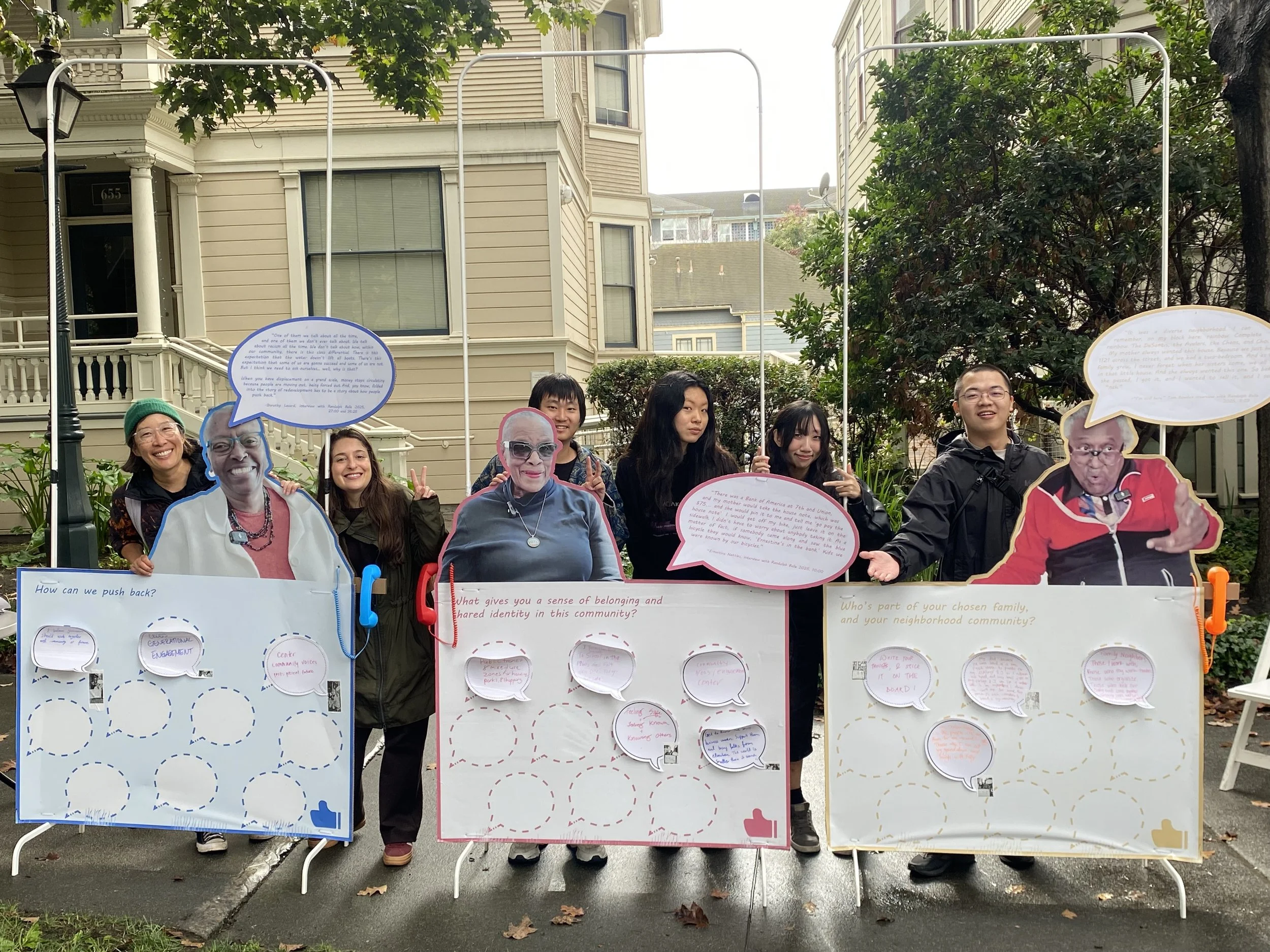
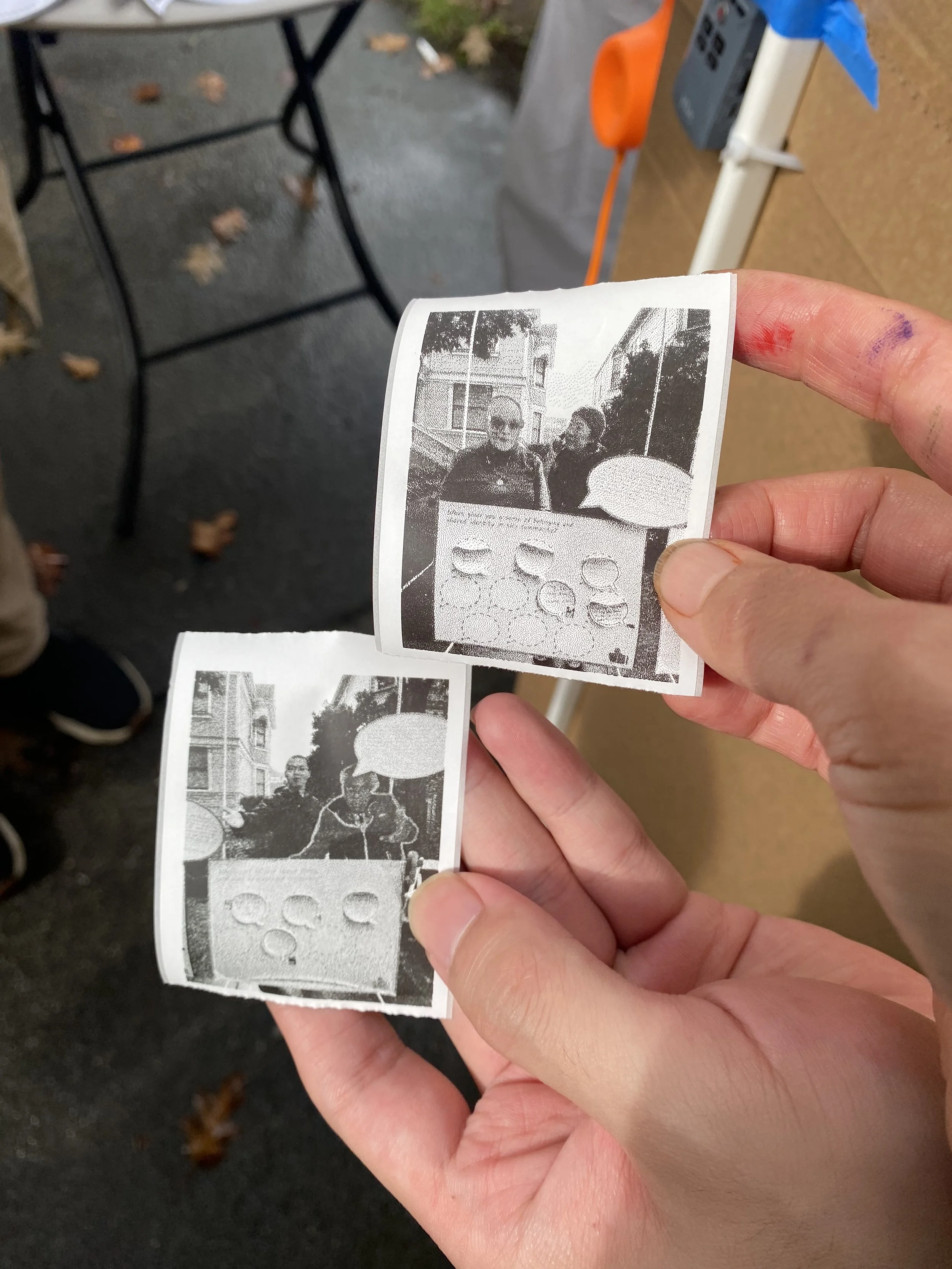
As you walk around Preservation Park, you might see some familiar faces. This series of five photo booths display life-sized cardboard cutouts and interview recordings with long-standing West Oakland residents. At each booth, participants can pick up a phone and listen to recent interviews conducted by Randolph Belle. Visitors can then enter the conversation directly, by adding their own speech bubble to the photo booth and taking a photograph with each treasured community member. But wait… there’s more! Two banners flanking the main entrance present other residents interviewed by Randolph Belle, in recordings that will be available to community members in the future.


Steamroll the Past, Inspirit the Future
Eitan Ruven and Dawn Lorence
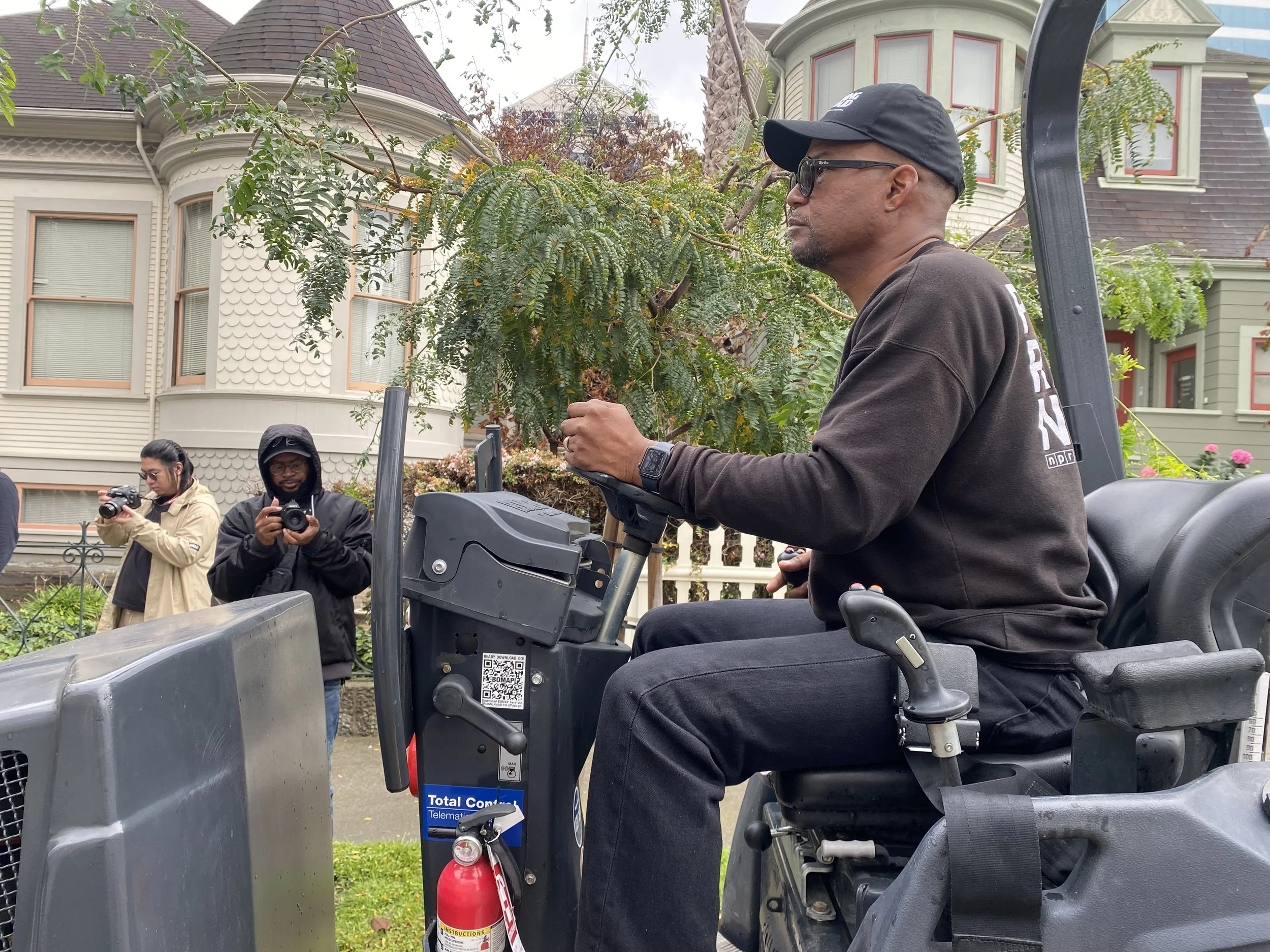
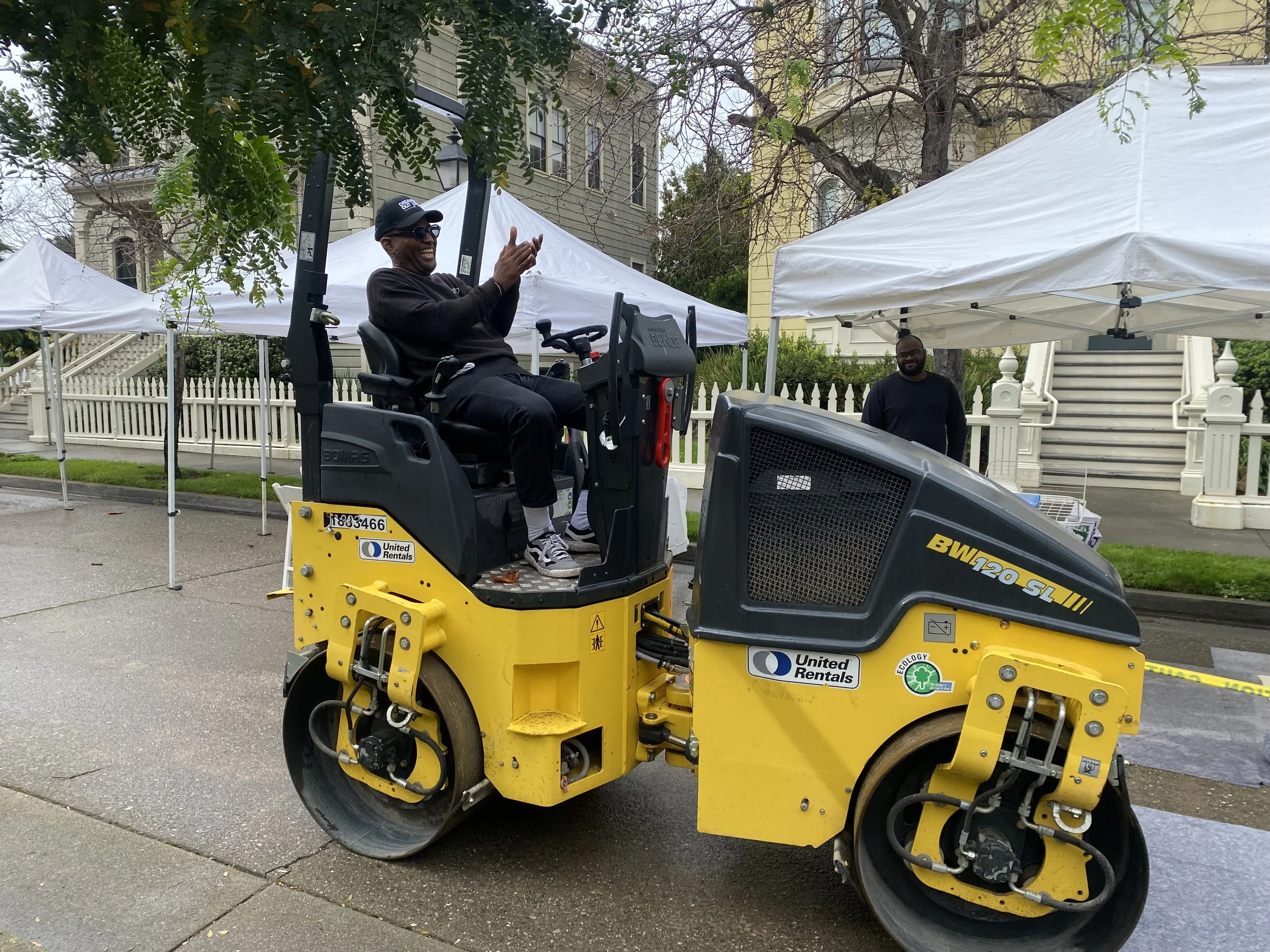
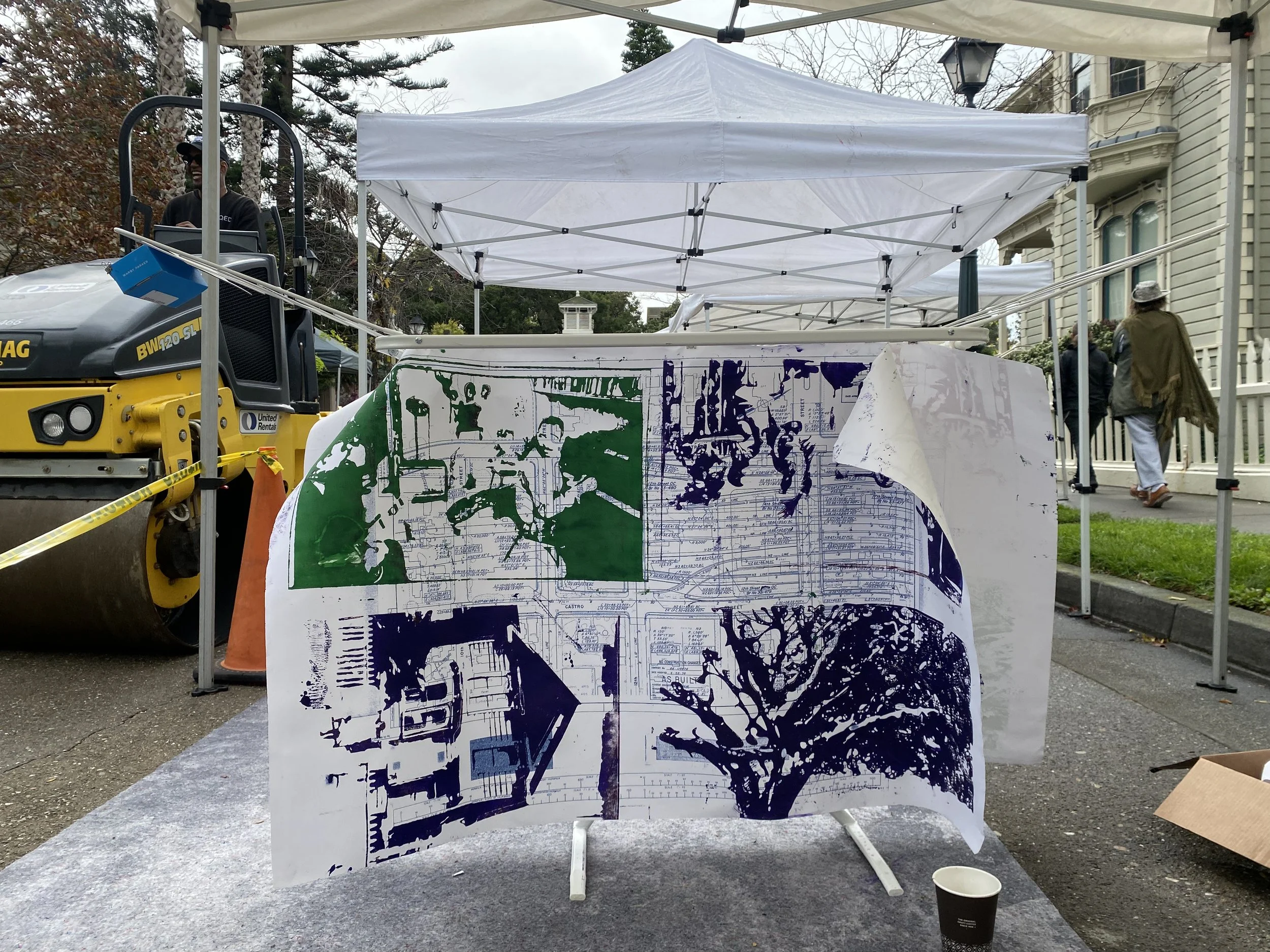
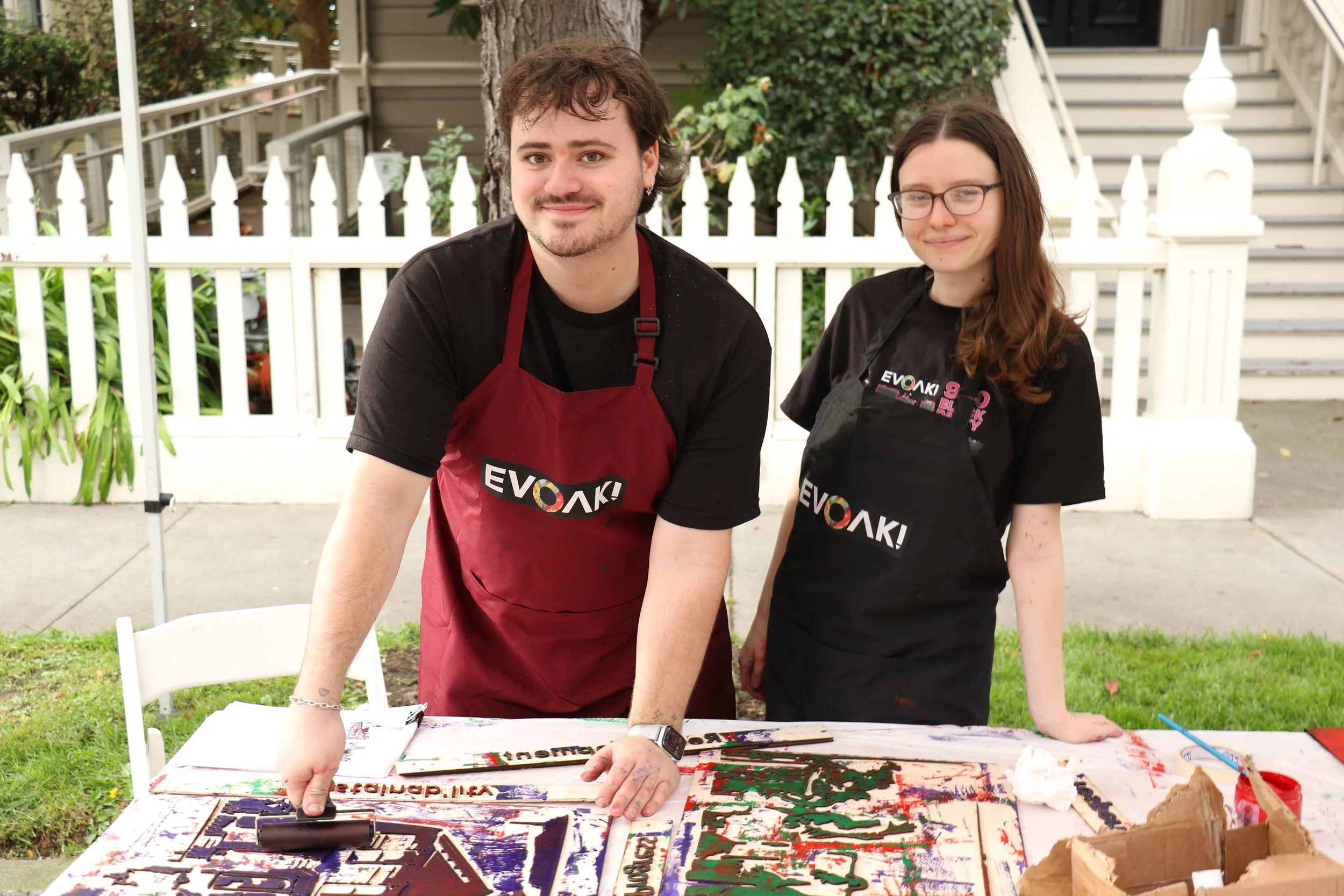
This interactive art-making activation repurposes historic as-built architectural drawings from the original construction of the I-980 freeway. Participants will imprint new layers of words and imagery onto these documents—harnessing past memories and future possibilities of West Oakland—using a literal steamroller to create an original block print. Inverting this symbol of destruction—of homes, families, and dreams—the steamroller now becomes a creative force for building understanding, healing, and imagination.
Sandbox I-980
Mariam Behbehani, Julianna Barreto, and Amanda Gomez
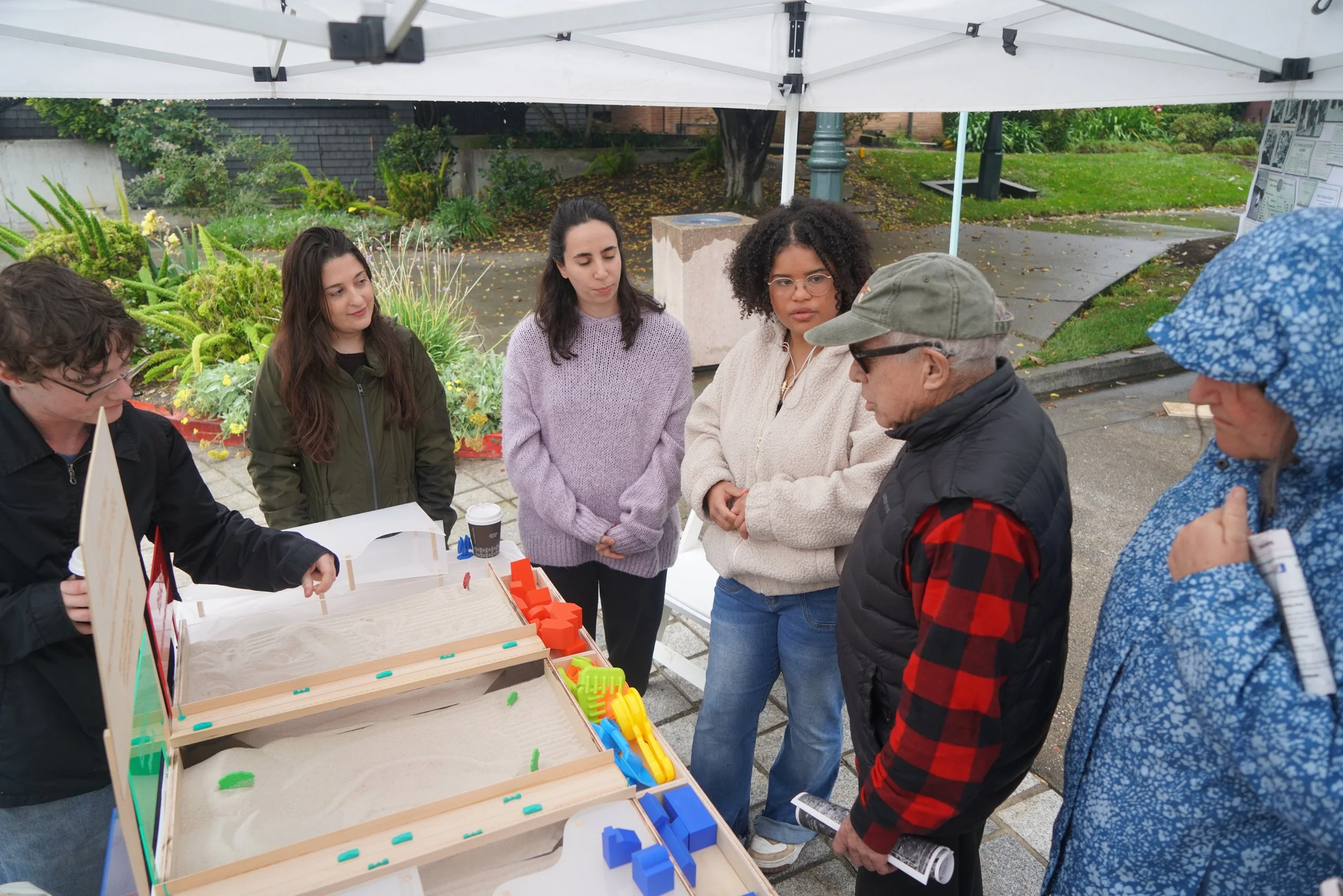
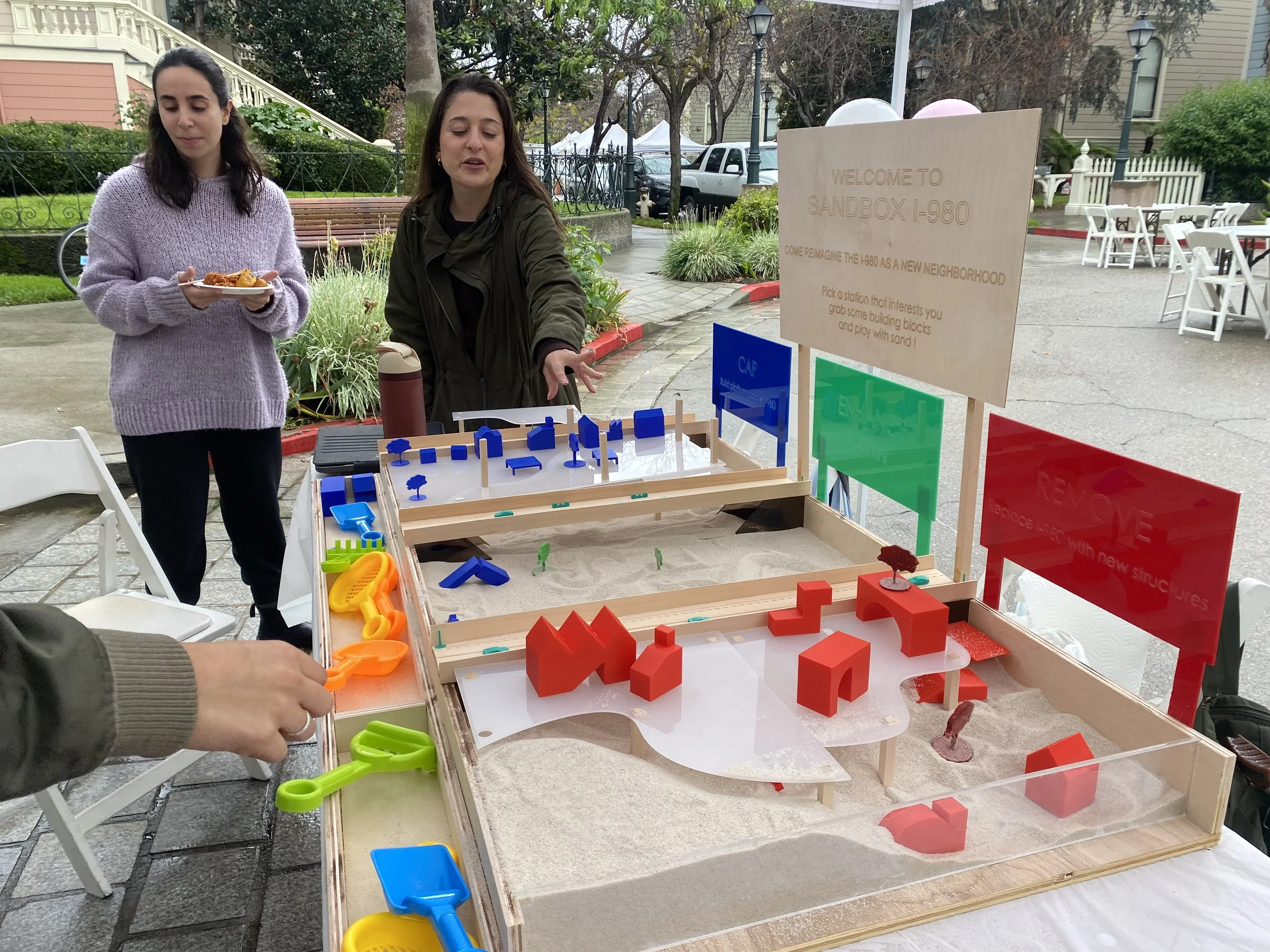
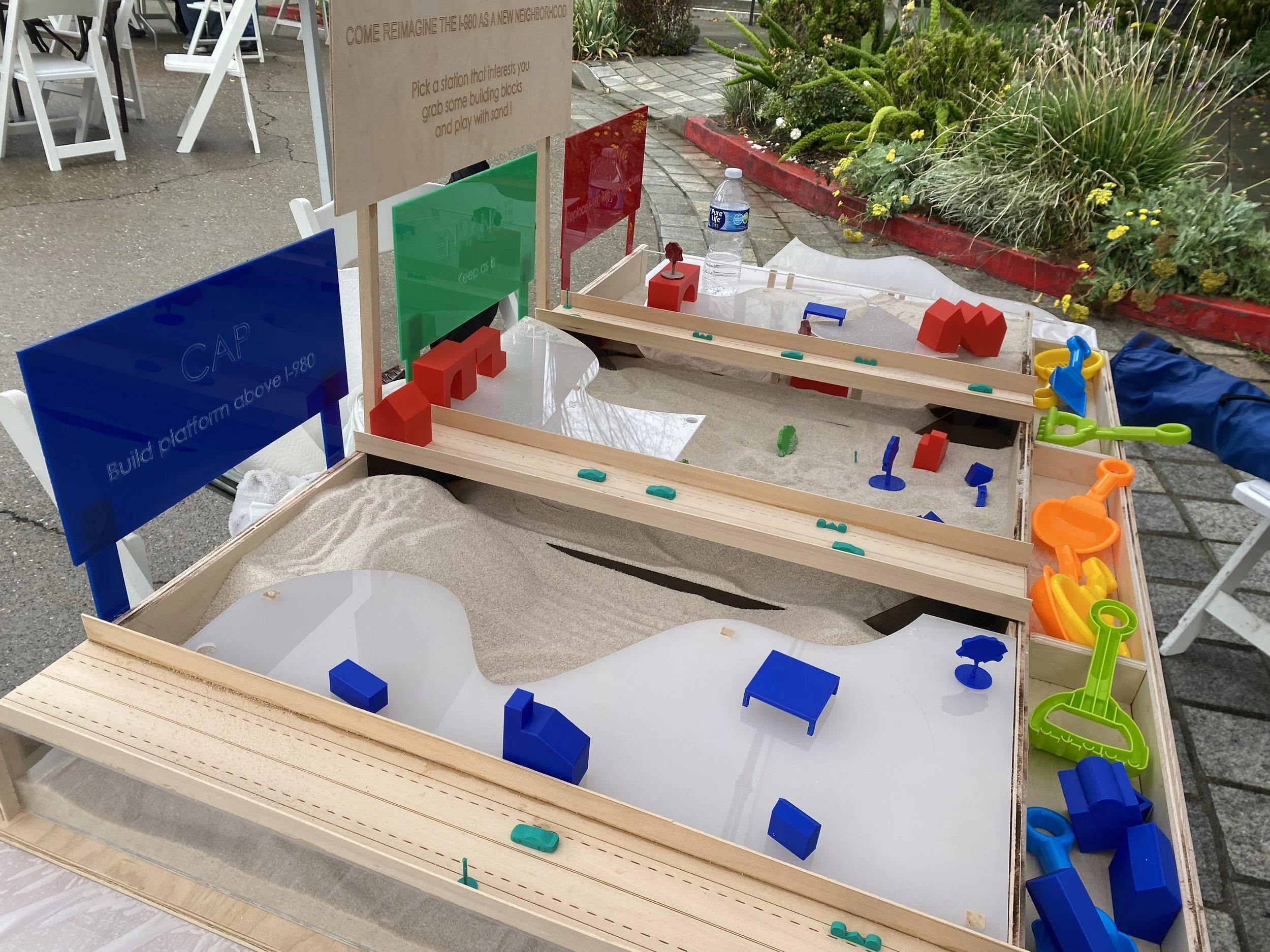
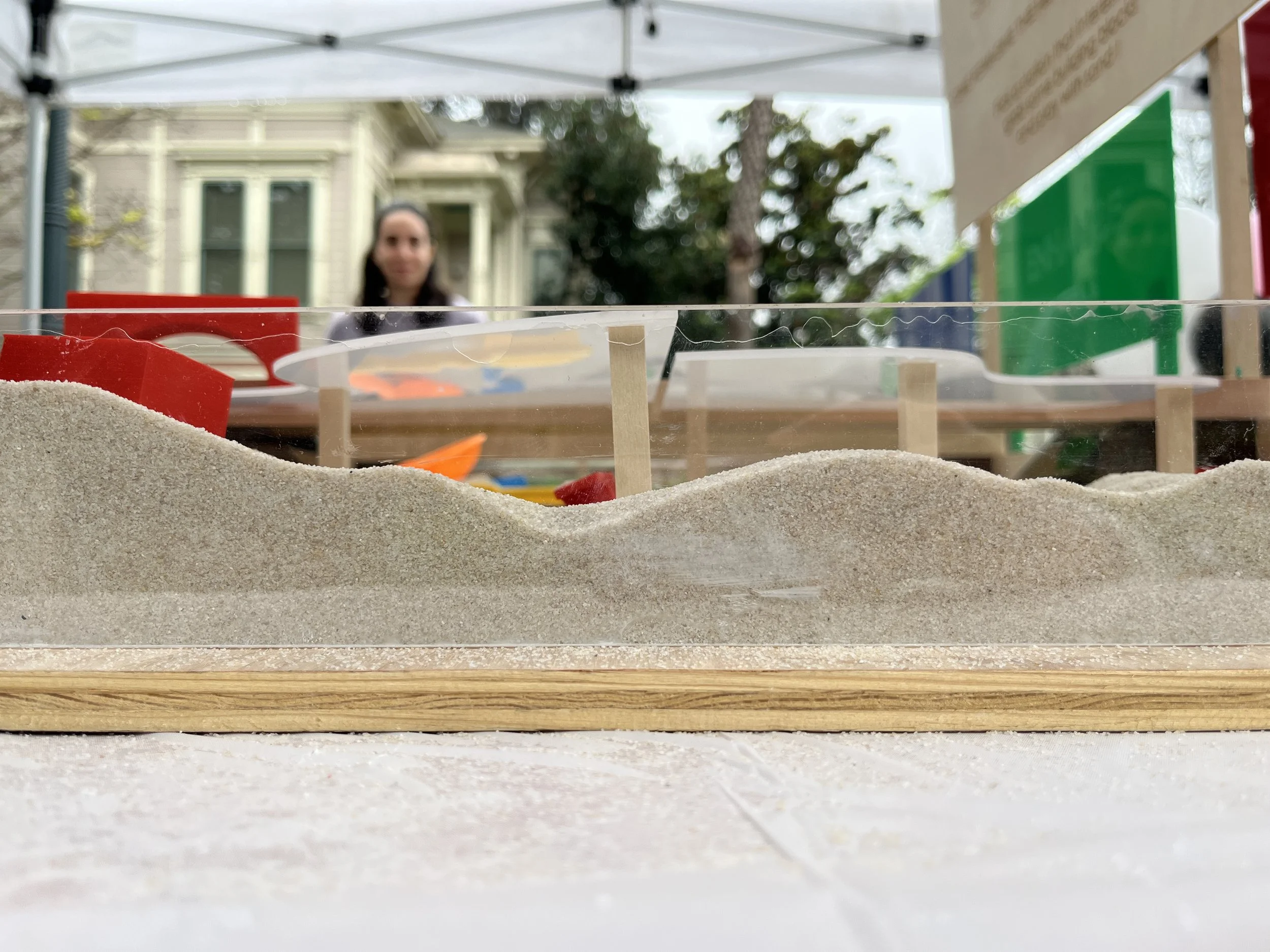
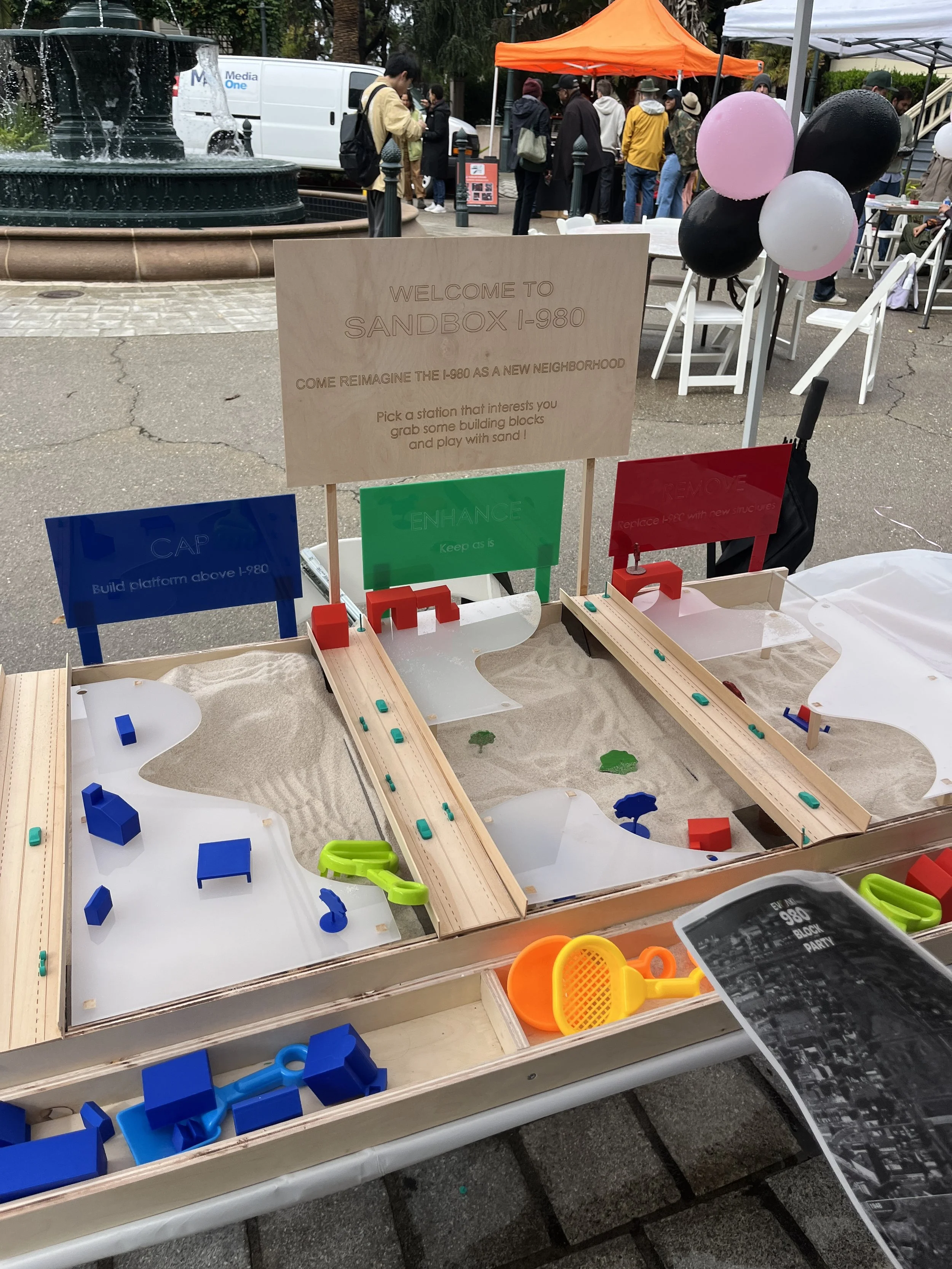
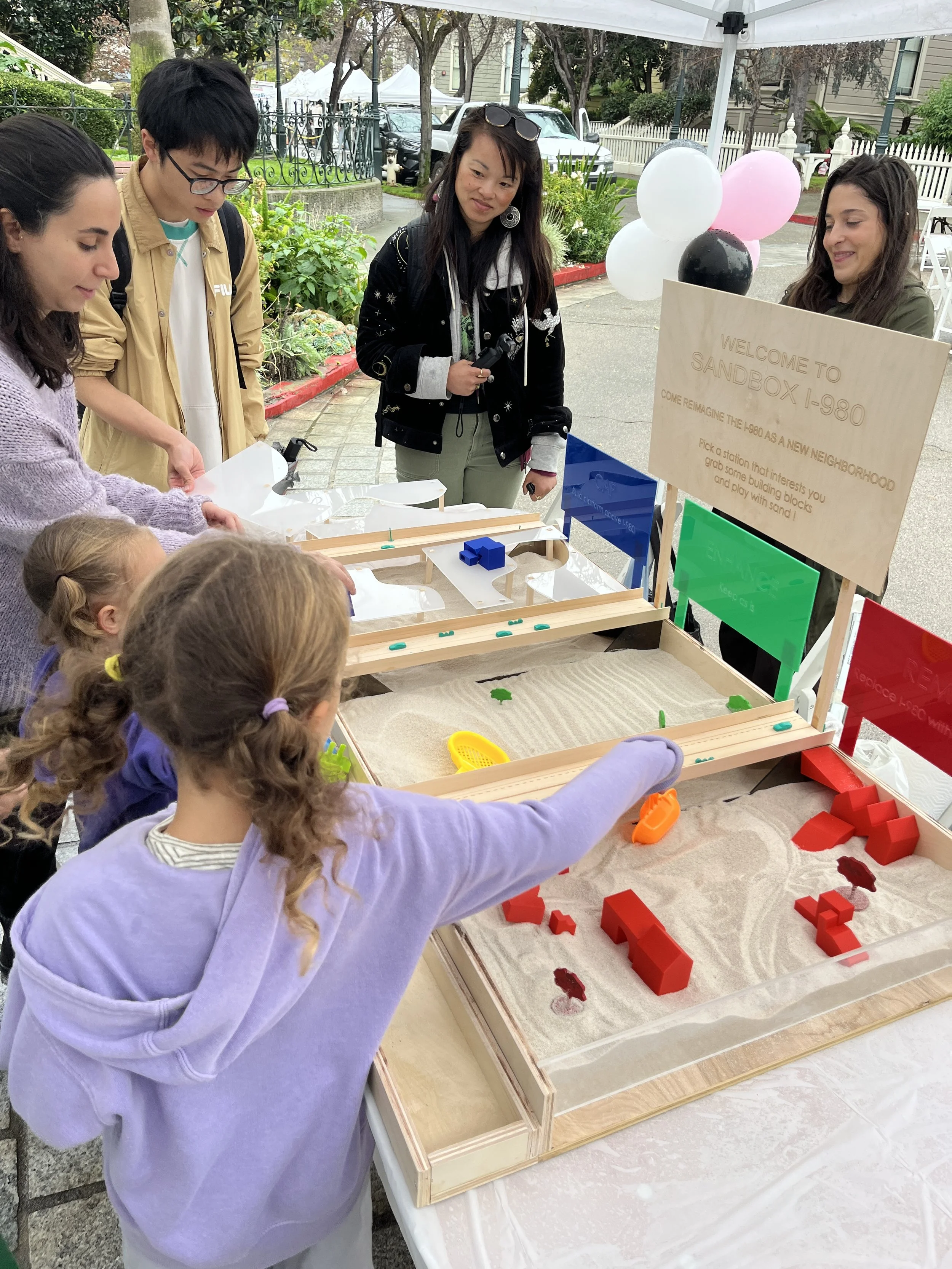
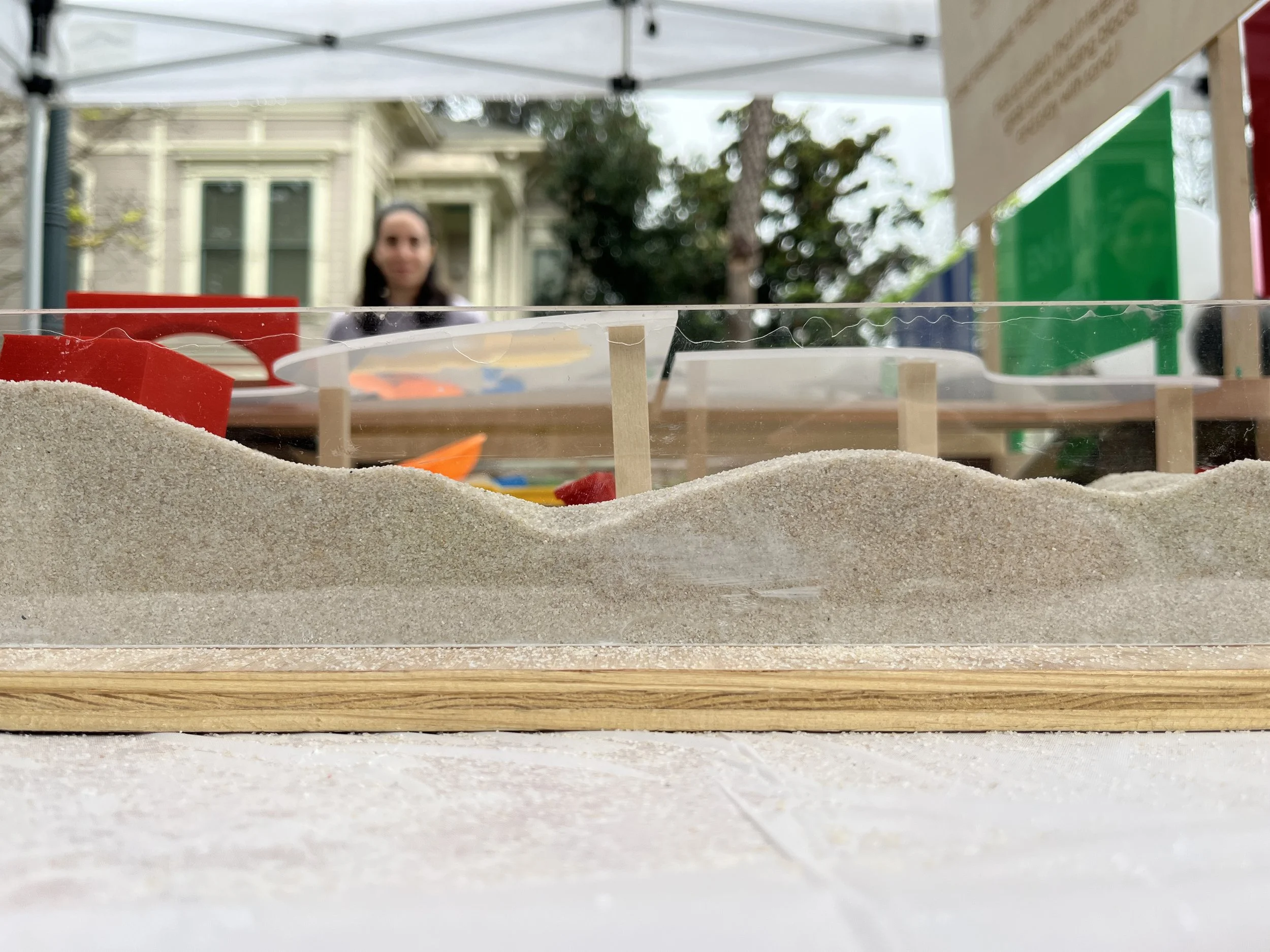
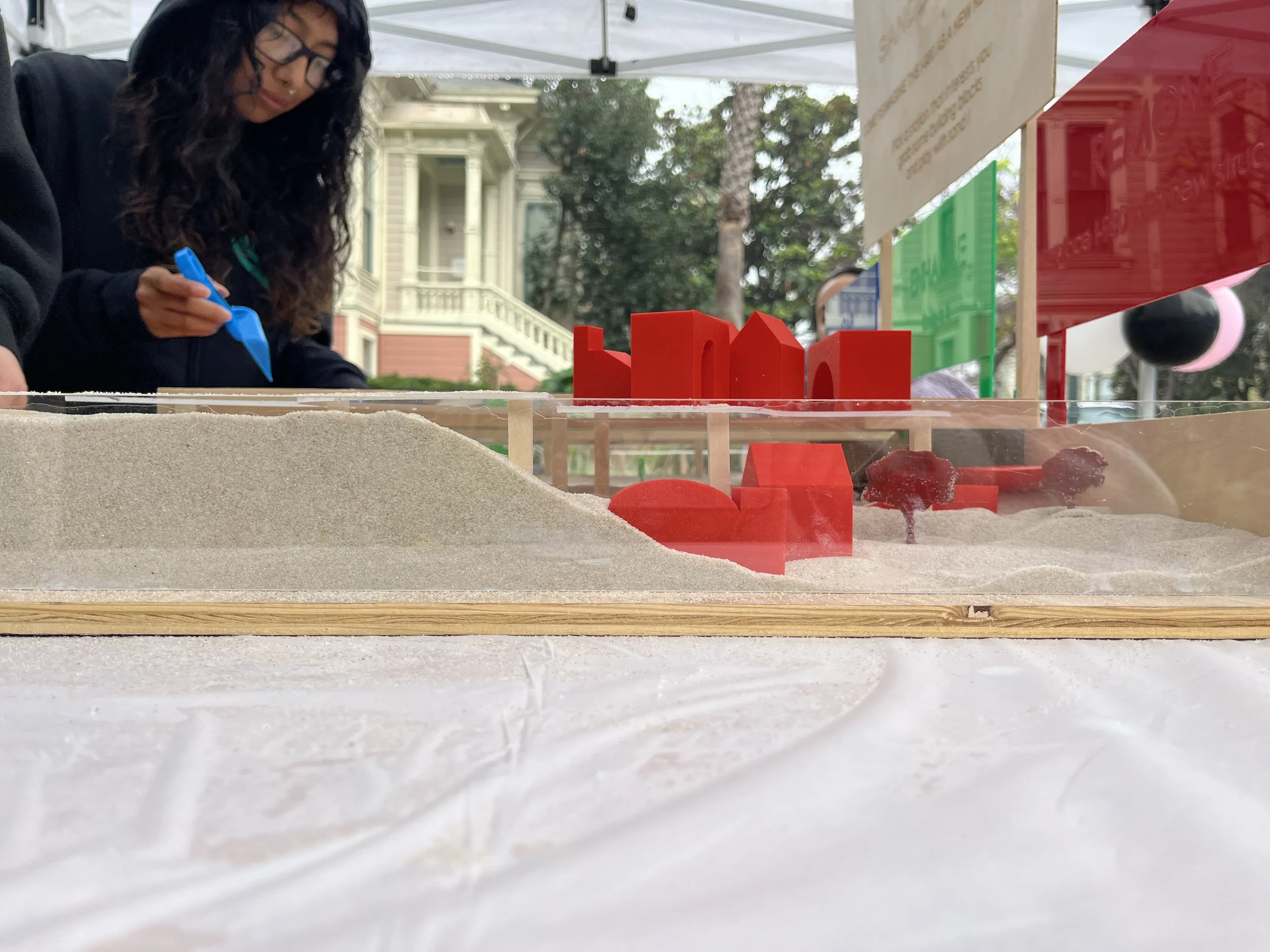
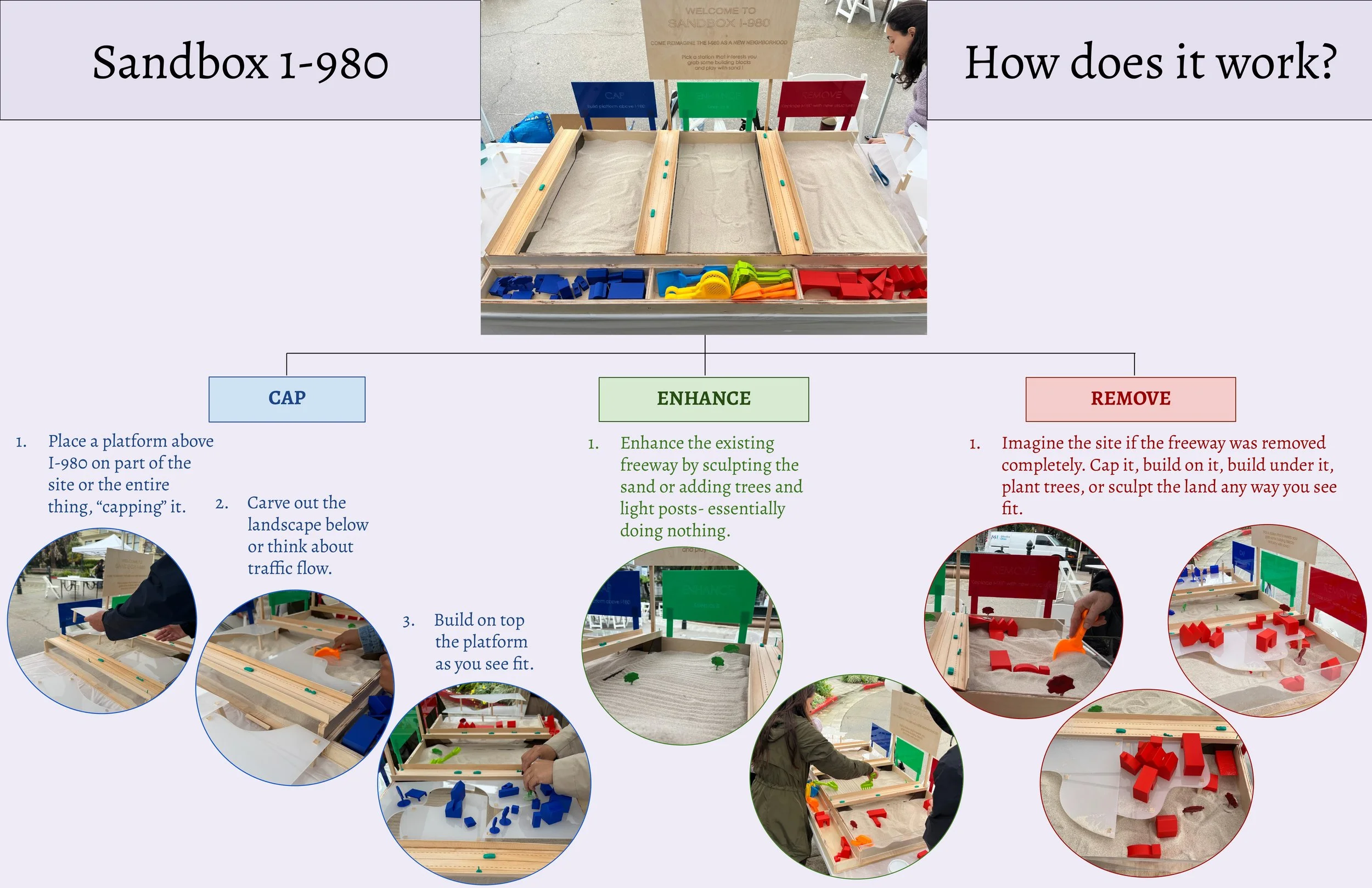
Unleash your creative talents to imagine what else the 980 corridor can actually look like. This sandbox presents three design options explored by the Vision 980 Study as a starting point—participants can see the difference between the “enhance,” “cap,” and “remove” options—and then invites participants to alter or combine these ideas, or even imagine an entirely different approach. Come use our miniature playground to move earth, plant trees, build new community platforms, and cluster buildings into new, vibrant and altogether surprising arrangements.
Newtopia: A Collaborative Urban Planning Game
Jin Mook Kang and Arya Manish Tipre
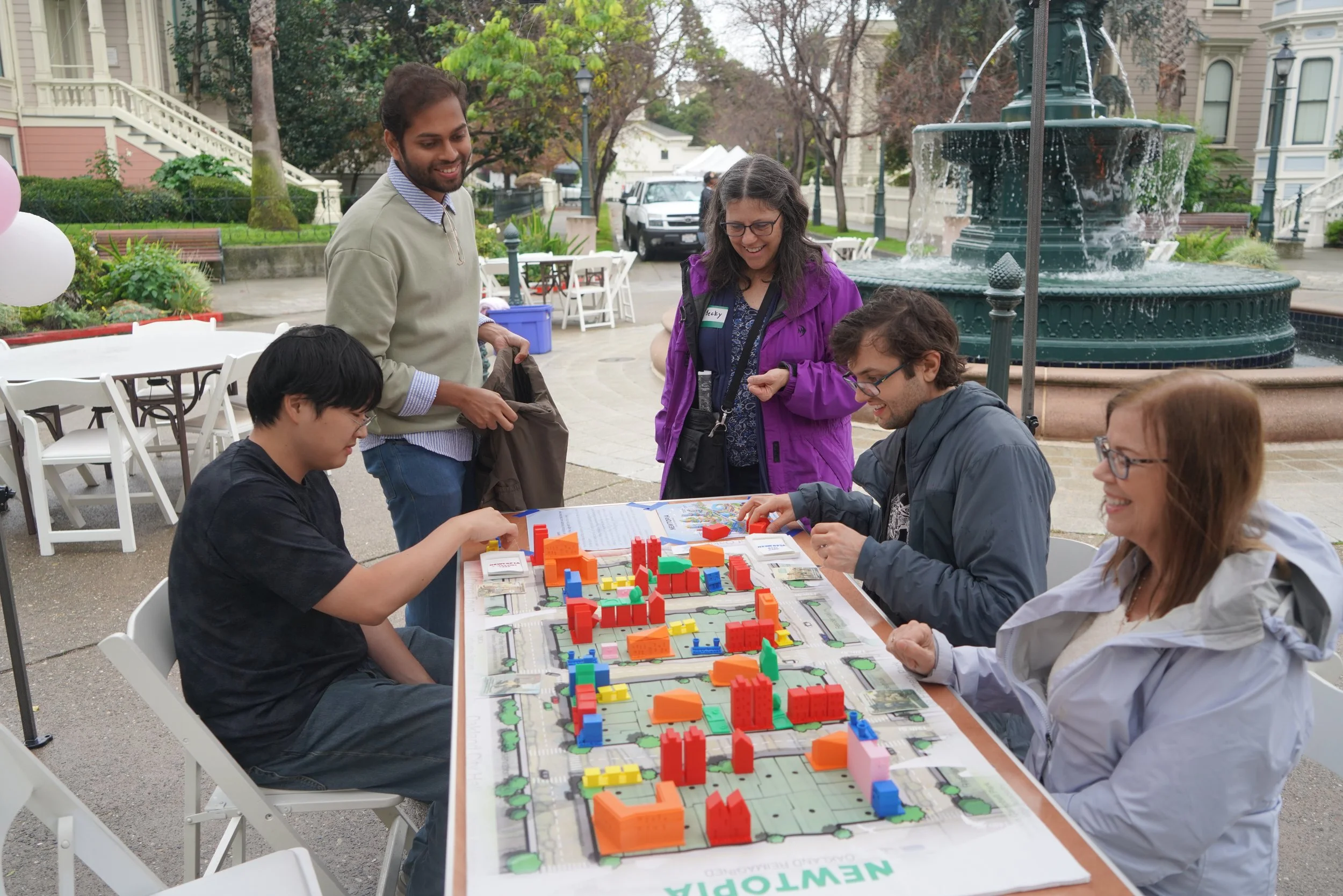
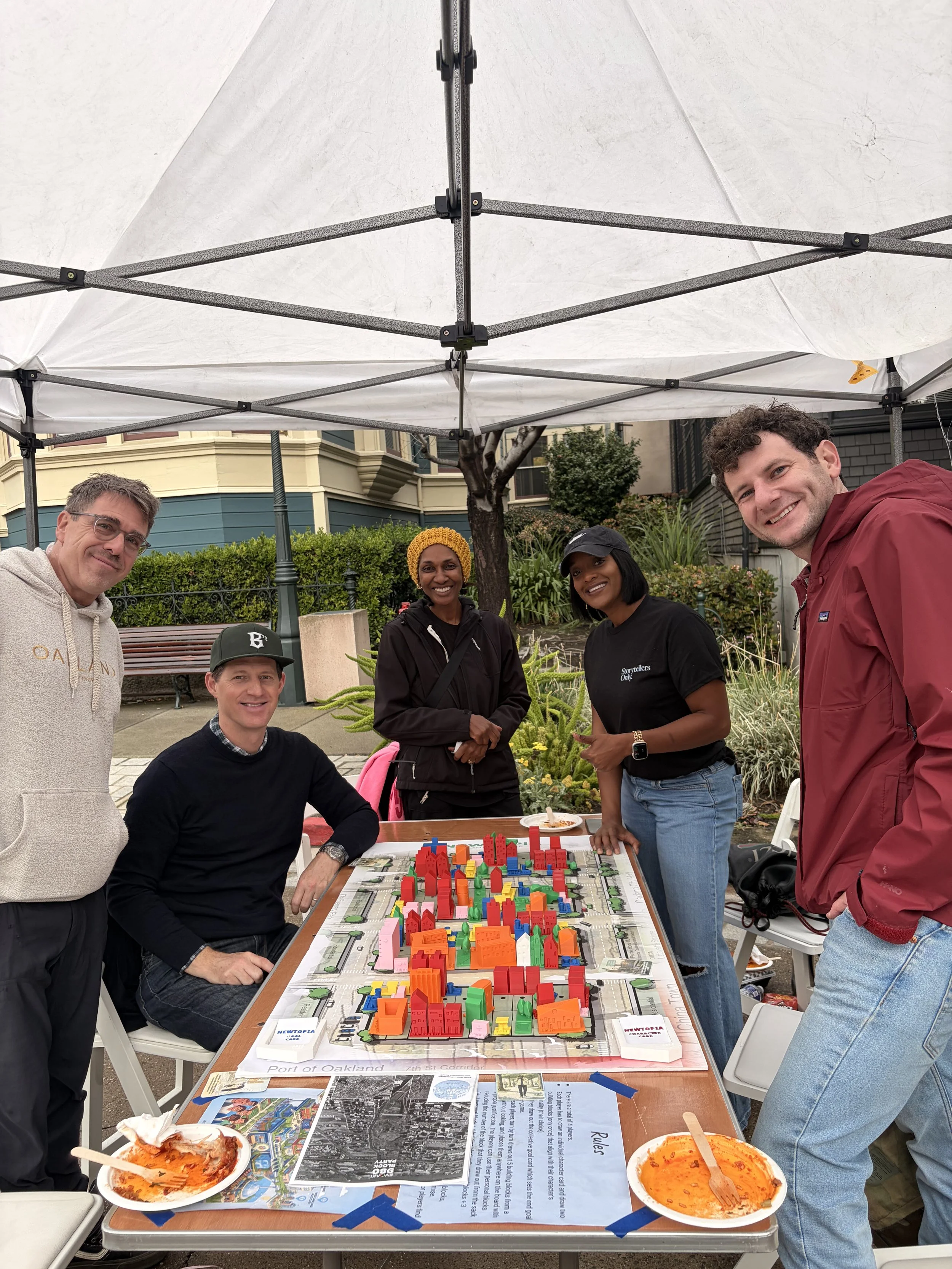
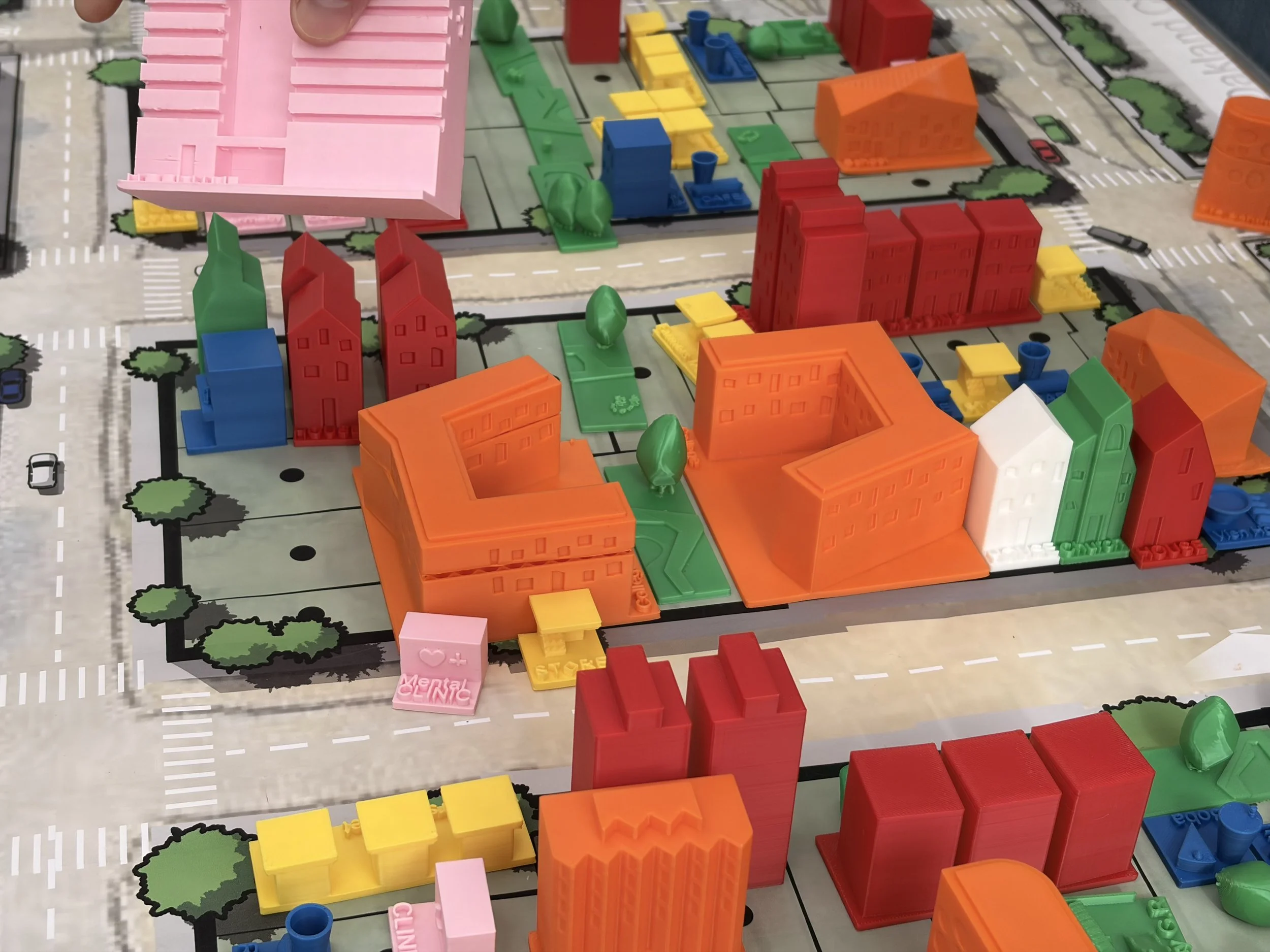
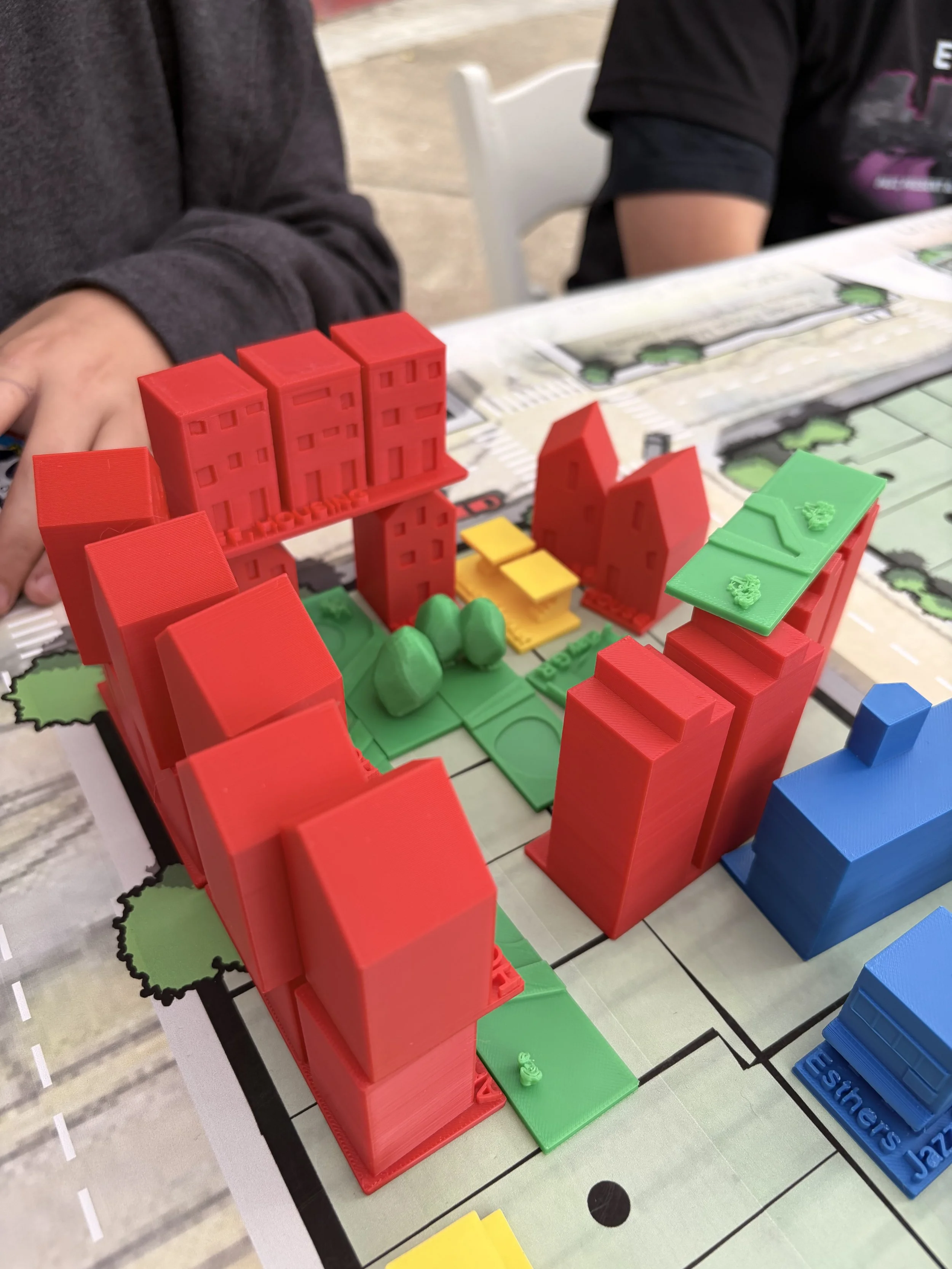
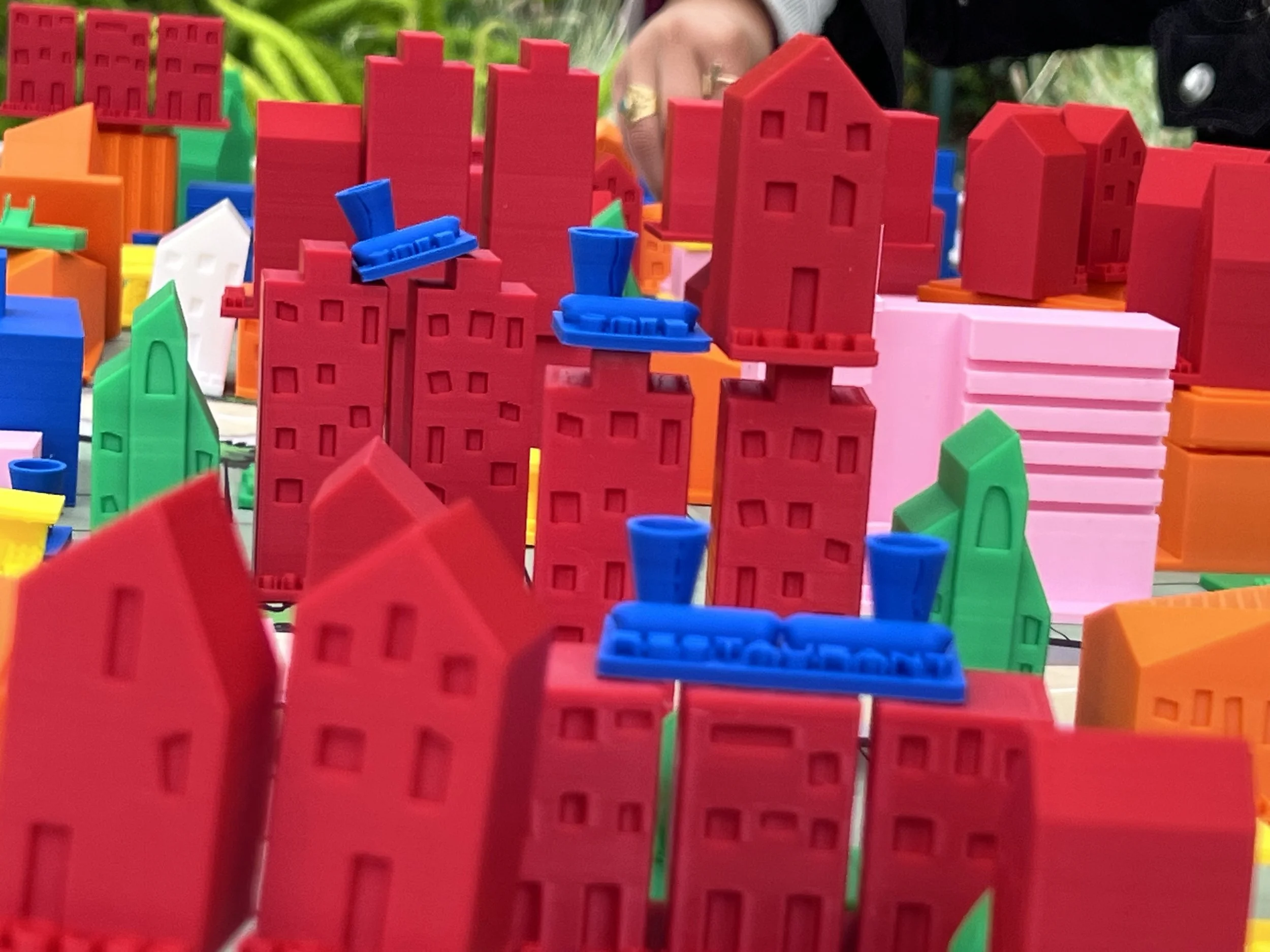
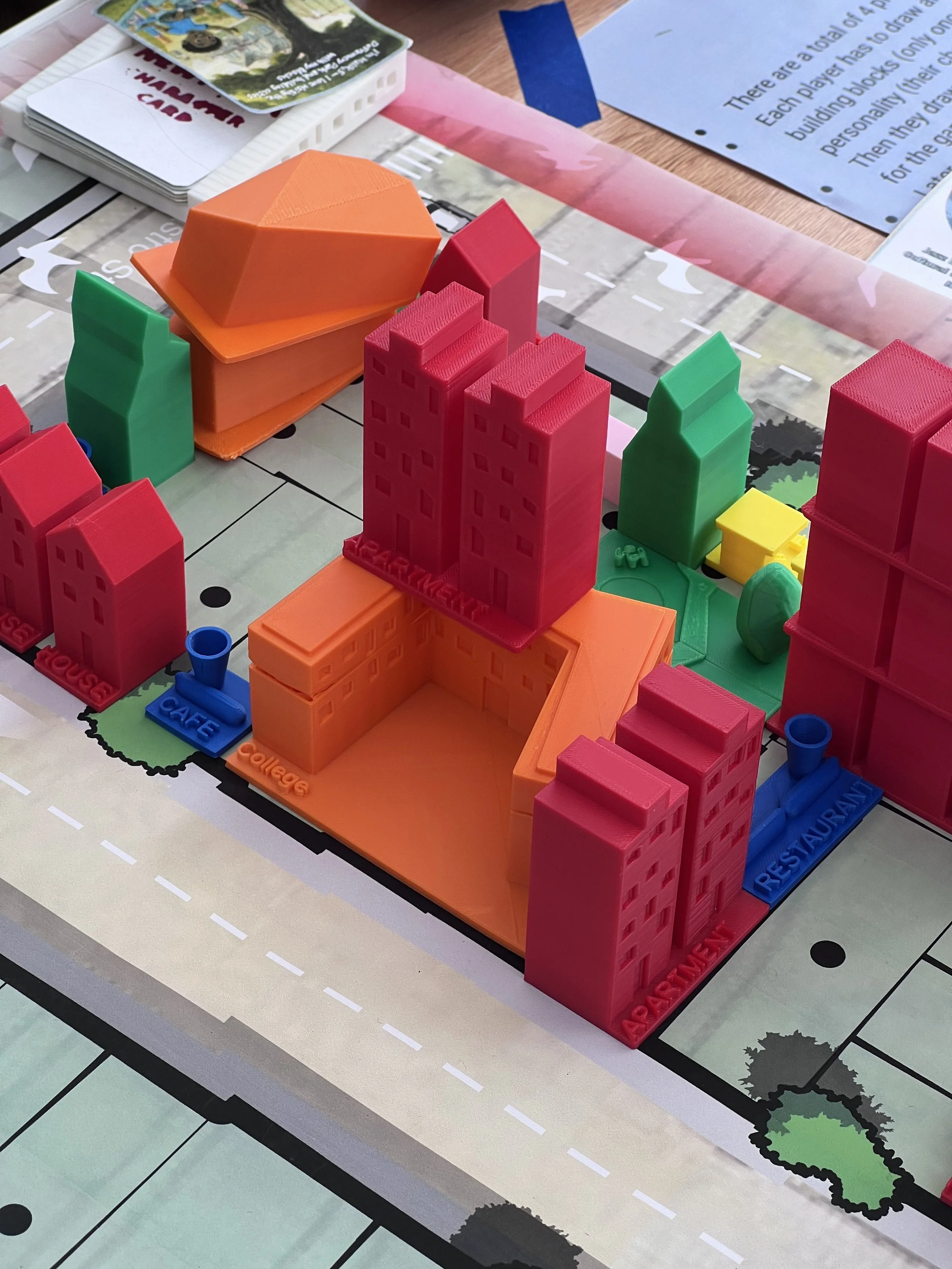
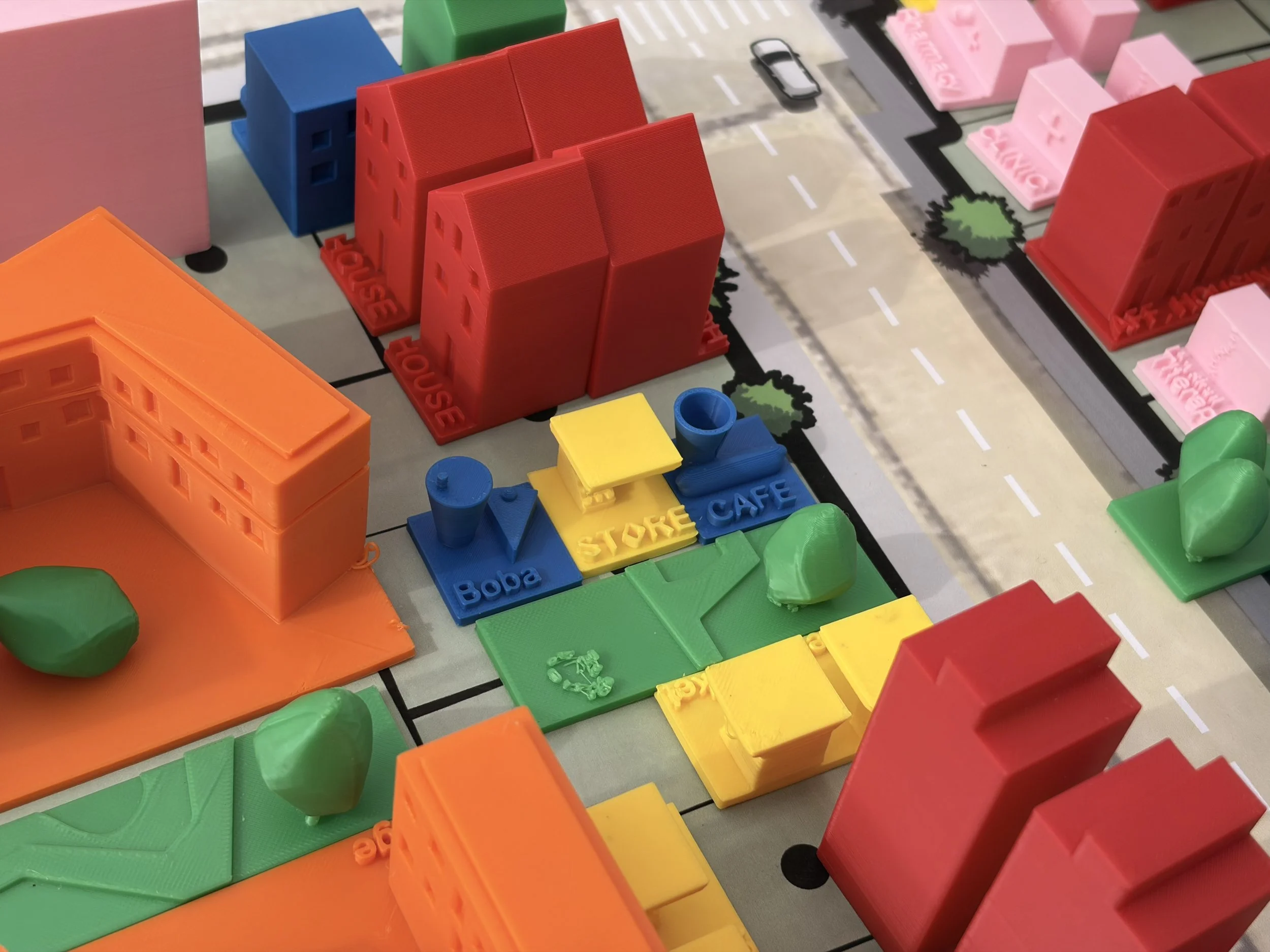
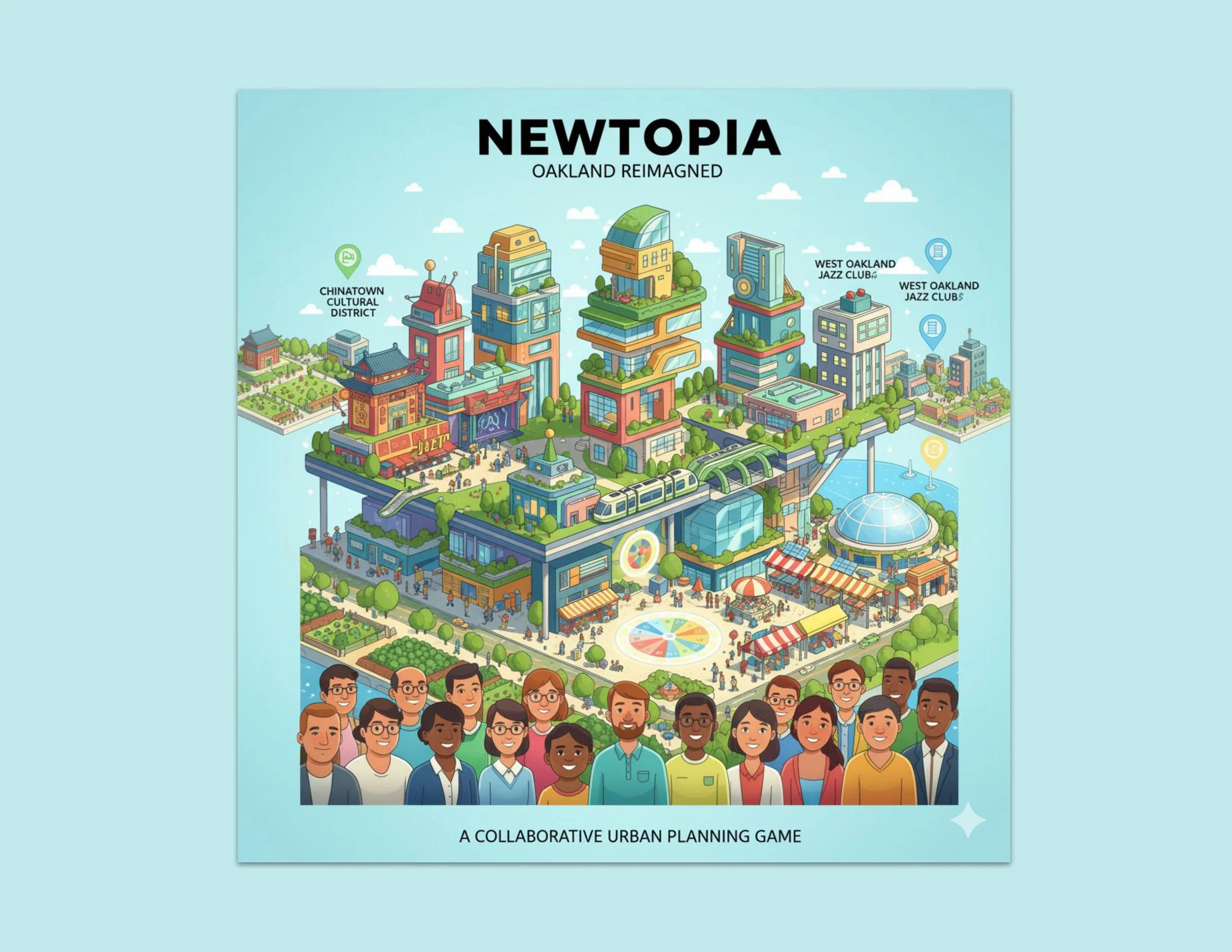
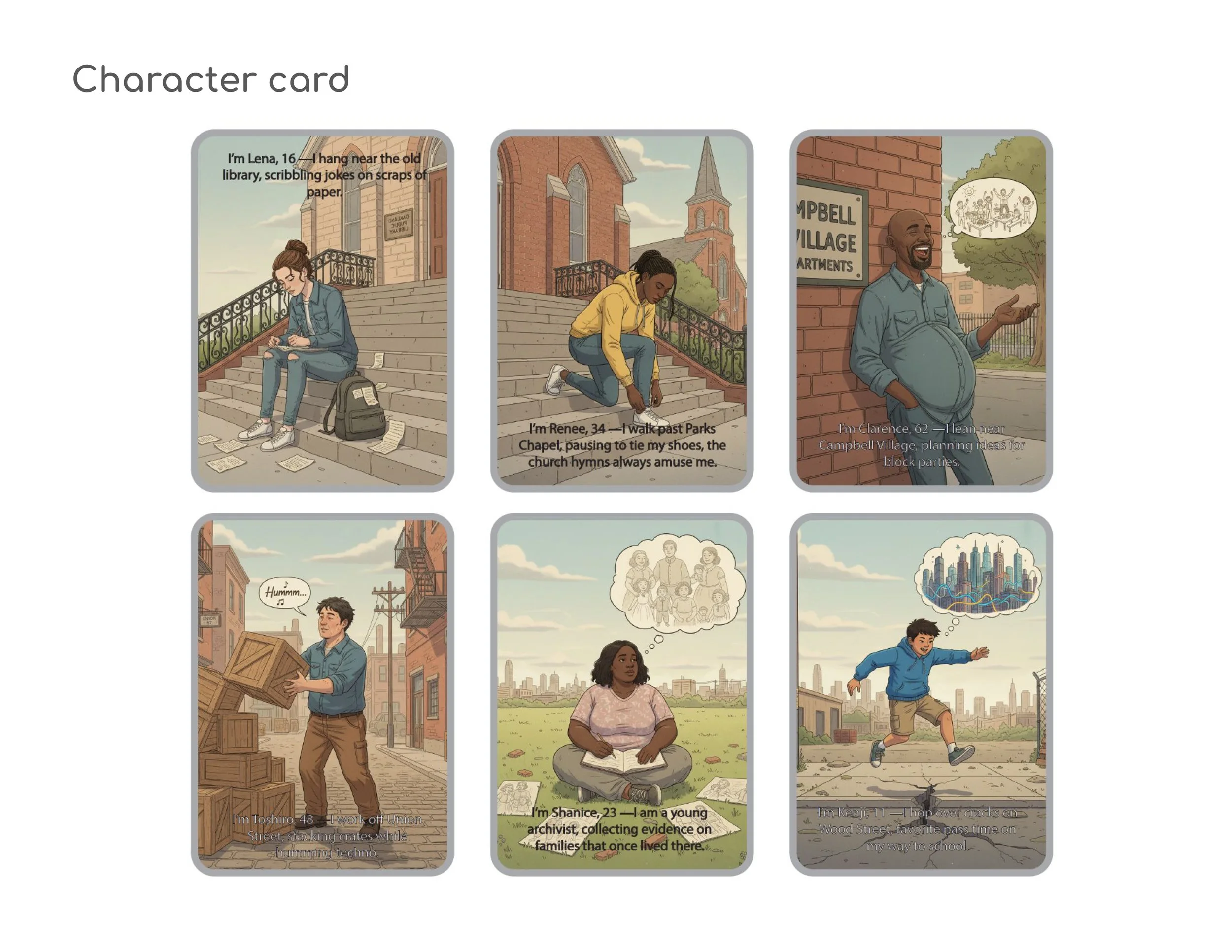
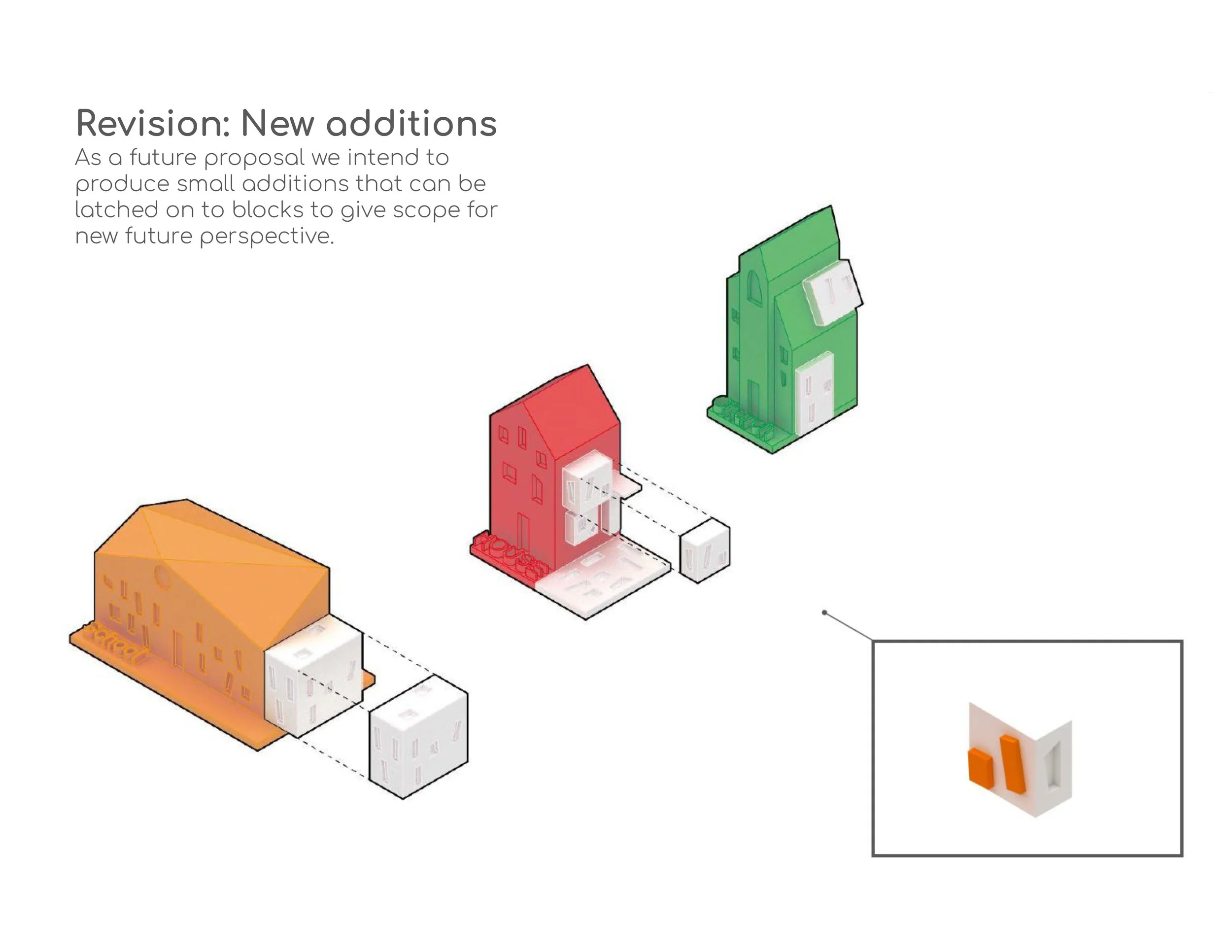
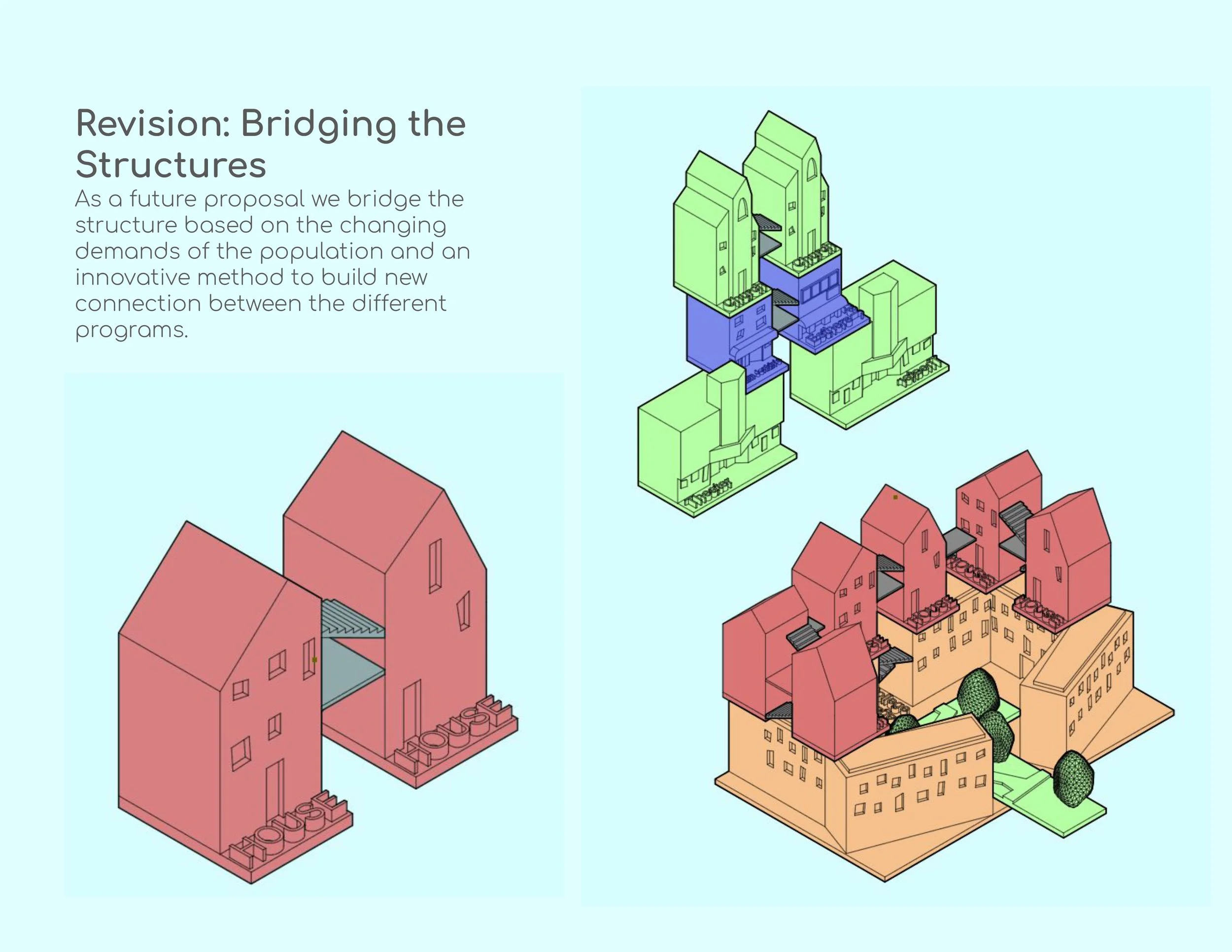
Newtopia is a collaborative strategy game where players reimagine Oakland’s I-980 corridor. Participants role-play various Oakland characters and work together to fulfill common goals defined by the game’s “Goal Cards,” ranging, for example, from housing justice to community health. Players can then play, imagine, and recombine varied installations—from homes and clinics to a marketplace. The goal is not to “win” but to negotiate, improvise, and tell stories by building a new community together. (Created by Jin Mook Kang, Arya Manish Tipre at California College of the Arts.)
On Public Engagement
For many decades, architects and urban designers have used surveys, post-it notes, town hall meetings, and collaborative design sessions to fold public opinion into their designs. However, such work–often called public engagement or participatory design–is frequently criticized for creating the mere impression of community consultation without meaningfully sharing power or enabling systemic change. Instead, this course advocates for a shift from public engagement to collective power. We will learn how a more empowered process allows community members to make decisions, manage budgets, and take ownership. Please see below some conclusions that emerged from the students’ final papers and reports:
“Designers are not simply creating objects but shaping the conditions under which publics can rehearse, contest, and reimagine spatial futures.” – Salim Ahmed
“The Oakland I-980 freeway is not just infrastructure. It is a political artifact. … The freeway didn’t just divide neighborhoods. It changed how people value proximity. It made walking feel unsafe. It turned everyday survival into logistical planning. The grocery store became a symbol of everything missing in a divided environment. Not luxury. Not aesthetics. Just access. That realization changed how I see architecture: it’s not about form first. It’s about what allows people to live with dignity.” – Khushboo Anuvadia
“For decades, new infrastructure promised to help the community but instead caused damage and pushed people out. The report shows that real engagement is not only about surveys or meetings. It is about rebuilding trust, listening carefully, and understanding people’s emotions and stories. This helped me recognize that architects today need more than technical skills. We need to learn how to listen…. architects should also learn to design social tools. These tools let people remember, communicate, and think about new futures. When used carefully, they can give people a safe feeling to speak honestly. This safety matters a lot in communities that faced displacement or trauma.” – Marshall Gaoyang Dong.
“Conflict is not noise to be filtered out but an essential expression of competing worldviews that must be acknowledged if genuine transformation is to occur. … Engagement tools must “do more than gather opinions.” They “must create the conditions i which publics can articulate power, test ideas, and encounter one another’s competing claims.” – Salim Ahmed
“The Oakland I-980 freeway is not just infrastructure. It is a political artifact. … The freeway didn’t just divide neighborhoods. It changed how people value proximity. It made walking feel unsafe. It turned everyday survival into logistical planning. The grocery store became a symbol of everything missing in a divided environment. Not luxury. Not aesthetics. Just access. That realization changed how I see architecture: it’s not about form first. It’s about what allows people to live with dignity.” – Khushboo Anuvadia